


By SPEAKIN’ OUT NEWS
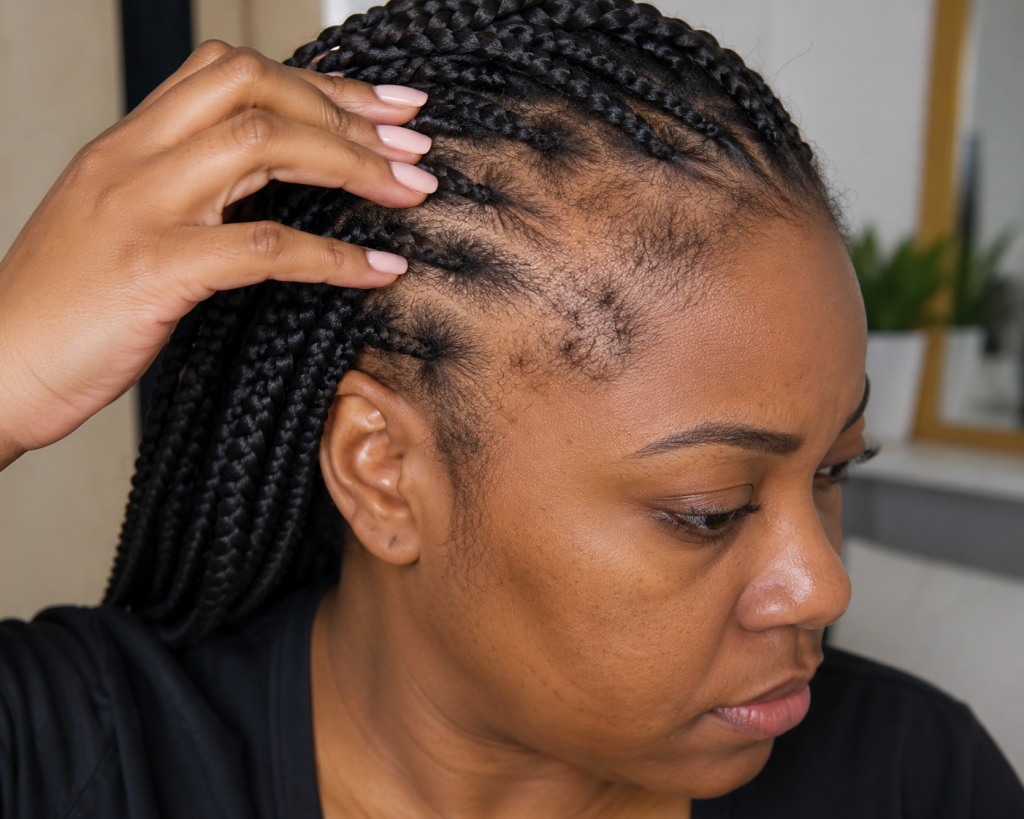
Approximately one-third of Black American women experience traction alopecia, making it the most prevalent form of hair loss among this demographic, according to Johns Hopkins School of Medicine research. The condition results from prolonged tension on hair follicles caused by popular protective styling practices, including tight braids, weaves, dreadlocks, and extensions.
A Johns Hopkins analysis published in the Journal of the American Academy of Dermatology reviewed 19 studies documenting a strong association between scalp-pulling hairstyles and gradual hair loss. Dr. Crystal Aguh, assistant professor of dermatology and director of the Ethnic Skin Program at Johns Hopkins, emphasizes the condition’s preventability through modified styling practices.
Early-stage traction alopecia manifests as small scalp bumps resembling pimples, progressing to missing and broken hair primarily affecting frontal and lateral hairline areas. The condition follows a biphasic pattern, with initial stages being nonscarring and reversible, while chronic cases result in permanent follicle damage and scarring that prevents new hair growth.
Johns Hopkins dermatologists recommend several preventive measures. Braids should be removed after three months maximum, while weaves and extensions require removal after eight weeks. Styling professionals should create looser braids and avoid applying adhesive directly to the scalp. Chemical treatments including relaxers compound damage risk, particularly when combined with tension-based styling.
Treatment protocols focus on reducing inflammation through intralesional triamcinolone injections and topical steroids, combined with topical minoxidil solution to promote regrowth. Natural hairstyles using moisturizers with conditioning agents demonstrate low traction alopecia risk regardless of styling method.
Researchers emphasize the need for dermatologists to provide culturally competent guidance addressing hairstyle risks while respecting personal identity and self-expression tied to hair in Black communities.