


By SPEAKIN’ OUT NEWS
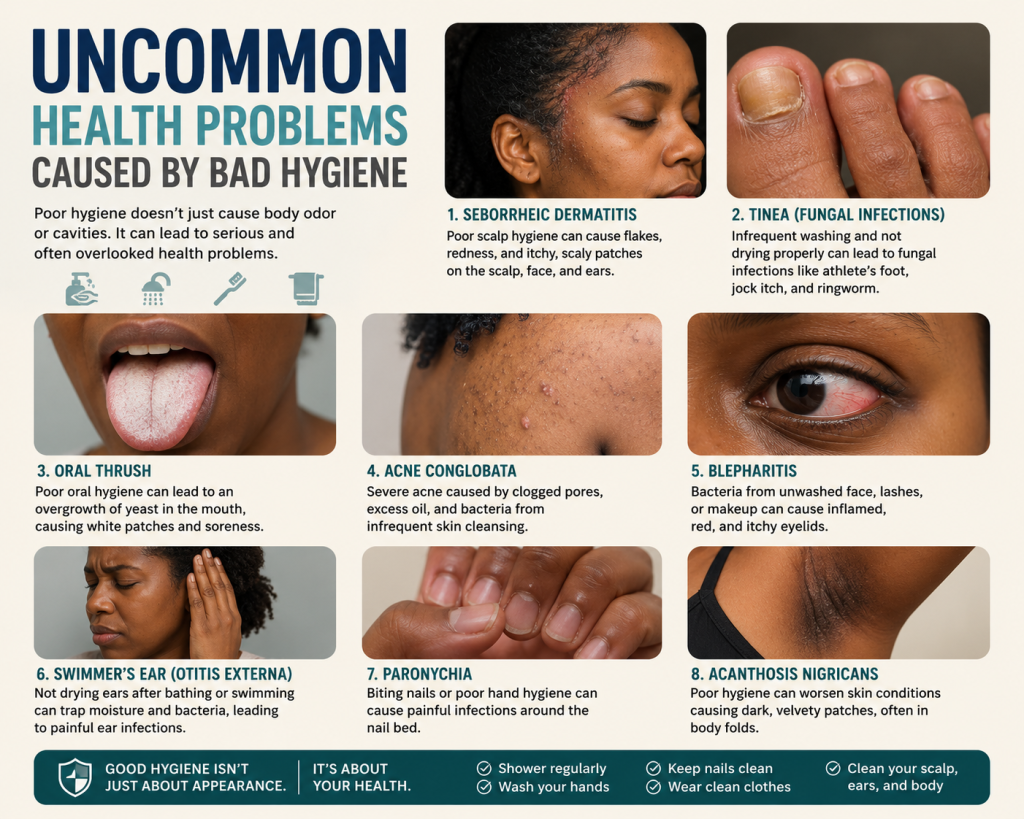
Poor hygiene extends beyond body odor and cavities, causing serious and often overlooked health problems. Healthcare providers emphasize that inadequate hygiene frequently signals underlying issues, including depression, physical disabilities, or access barriers, requiring compassionate intervention.
Seborrheic dermatitis results from poor scalp hygiene and causes flakes, redness, and itchy, scaly patches on the scalp, face, and ears. Tinea fungal infections, including athlete’s foot, jock itch, and ringworm, develop when infrequent washing and improper drying create moist environments where fungi thrive. Acne conglobata, a severe form of acne caused by clogged pores and excess oil from infrequent skin cleansing, produces painful, inflammatory lesions.
Oral thrush develops from poor oral hygiene, leading to yeast overgrowth in the mouth and producing white patches and soreness. Blepharitis occurs when bacteria from unwashed face, lashes, or makeup cause inflamed, red, and itchy eyelids. Swimmer’s ear, or otitis externa, develops when moisture and bacteria trapped in the ear canal after bathing or swimming cause painful infections.
Paronychia results from biting nails or poor hand hygiene, causing painful infections around the nail bed. Acanthosis nigricans worsens with poor hygiene, creating dark, velvety patches often in body folds. For overweight individuals, dead skin and sweat accumulate in skin folds, producing offensive body odor and increasing the risk of infection.
Inadequate hand hygiene transmits hepatitis A, gastroenteritis, and food poisoning. Not washing hands after using the bathroom exposes individuals to E. coli from their own feces or urine, which can cause severe gastrointestinal infections when transferred to the mouth.
Poor oral hygiene links dental bacteria to heart disease, worsened diabetes, pneumonia, and bronchitis. Not bathing can trigger psoriasis and eczema flare-ups, as dirt and bacteria irritate sensitive skin.
Treatment approaches vary by condition but emphasize restoring basic hygiene practices through support systems, addressing underlying mental health concerns, and providing accessible cleaning resources.