


Studies suggest possible links after severe infection, but an association does not prove COVID causes lung cancer in people.
SPEAKIN’ OUT NEWS
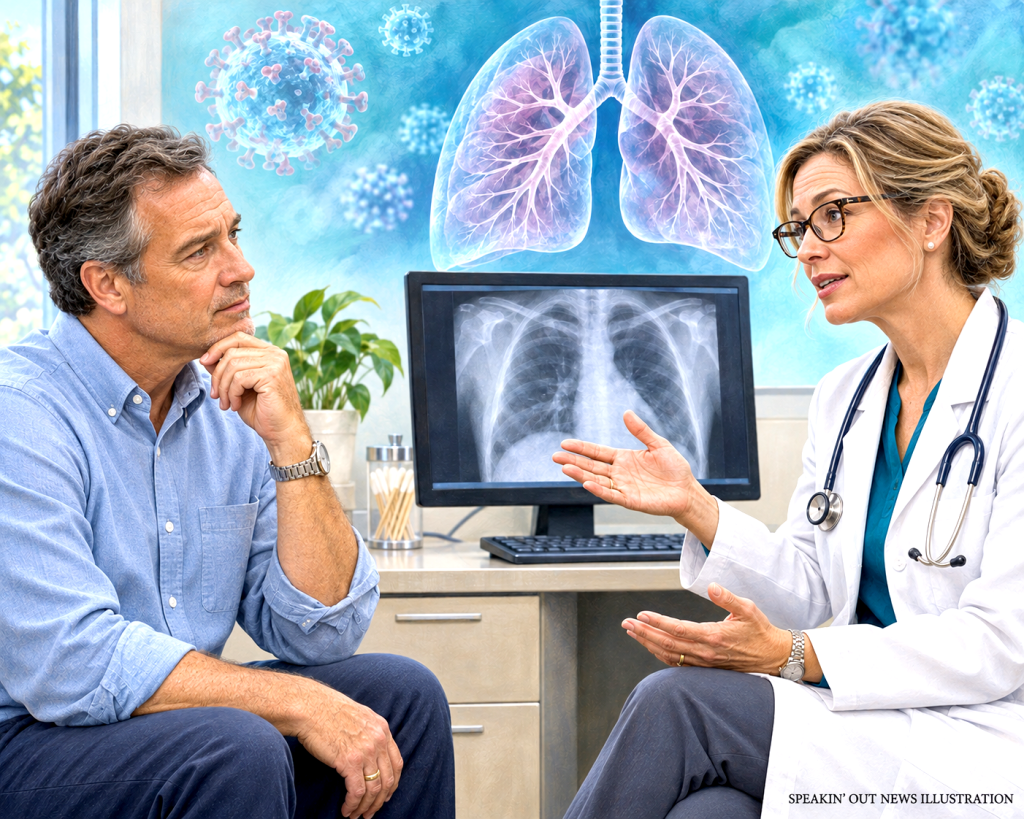
HUNTSVILLE — As November brings attention to lung cancer, emerging research is raising questions about whether severe COVID-19 can influence cancer risk. The findings warrant attention, but they do not prove that COVID causes lung cancer in people.
A 2026 study published in Cell combined human medical records with experiments in mice. Researchers found an association between previous hospitalization for severe COVID and later lung cancer diagnoses.
After adjustment for age, sex, and smoking status, severe COVID was associated with approximately a 24% higher relative hazard of lung cancer diagnosis.
That does not mean 24% of COVID survivors developed cancer. A relative increase compares groups, not an individual’s probability of becoming ill.
The human findings were observational. Other health differences and patterns of medical care may influence the results. More chest imaging after respiratory illness can also uncover cancers that were already present.
In mice, researchers found that severe respiratory viral infections changed the lung’s immune environment and accelerated tumor growth. Those experiments offer biological clues, but animal findings cannot establish the same outcome in humans.
A separate study, published in Nature in 2025, examined another concern: whether respiratory infections could awaken dormant cancer cells already in the lungs.
Researchers used mouse models of breast cancer and reviewed human medical records. The human analyses found associations between COVID and cancer progression, including breast cancer spreading to the lungs.
That is different from developing a new cancer originating in the lung.
“Dormant cancer cells are like the embers left in an abandoned campfire,” researcher James DeGregori explained in an NIH summary, comparing respiratory viruses to wind that could reignite them.
These findings concern possible cancer progression and recurrence. They do not establish that long COVID symptoms indicate cancer.
Smoking remains the leading lung cancer risk factor. Other established risks include radon, secondhand smoke and certain workplace exposures, according to federal health guidance.
For readers, persistent symptoms deserve evaluation rather than assumptions. The CDC lists a worsening or persistent cough, chest pain, shortness of breath, coughing up blood and unexplained weight loss among possible lung cancer symptoms. Other illnesses can cause these symptoms too. Symptoms alone cannot establish a diagnosis.
Screening is a separate issue from evaluating symptoms.
The U.S. Preventive Services Task Force recommends annual low-dose CT screening for adults ages 50–80 with at least a 20 pack-year smoking history who currently smoke or quit within the past 15 years.
A COVID history alone is not part of those eligibility criteria. Patients should discuss their symptoms, smoking history and individual risks with a clinician.
During Lung Cancer Awareness Month, the message is vigilance without alarm: emerging research deserves follow-up, while prevention, appropriate screening and medical assessment remain essential.