


Decatur facility will combine patient treatment with hands-on training to help strengthen the region’s dental workforce.
SPEAKIN’ OUT NEWS
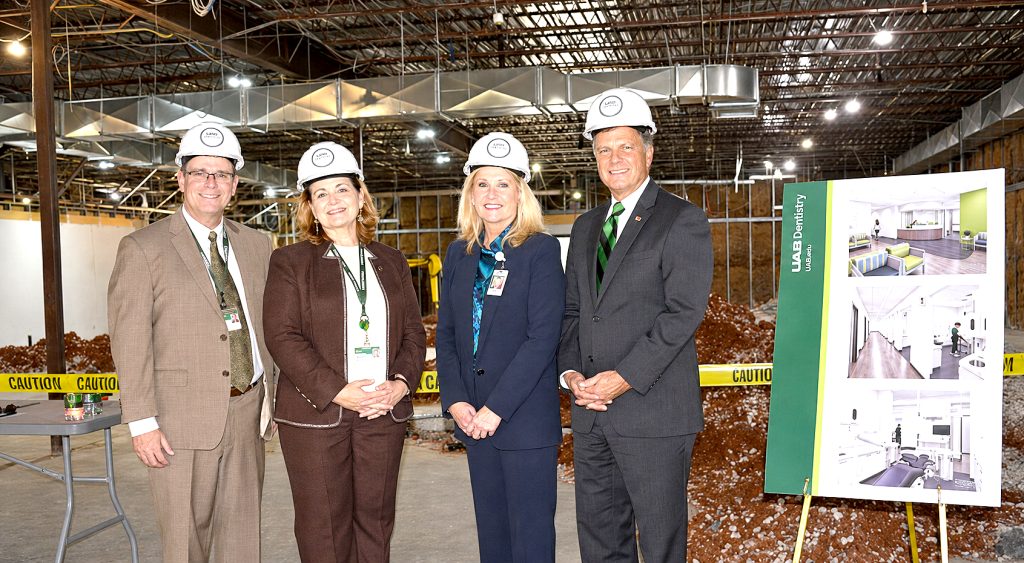
DECATUR — North Alabama families facing limited dental care options could gain a new treatment destination as the University of Alabama at Birmingham develops a community clinic designed to address the region’s shortage of providers.
UAB announced Nov. 2 that its School of Dentistry has broken ground on the project at Decatur Morgan Hospital’s Parkway Campus, 1874 Beltline Road SW.
The approximately 7,200-square-foot freestanding building will contain nine treatment rooms, including one designed for accessibility and patients with special needs. Faculty, residents and dental students will provide care.
“Expanding access to care in communities such as Decatur is an important part of our mission to help optimize oral health care in Alabama,” said Nicolaas Geurs, dean of UAB’s School of Dentistry.
Planned services include preventive, restorative and emergency treatment, with root canals, extractions and treatment for chipped or broken teeth among the procedures identified by UAB.
The state is funding the project, with Sen. Arthur Orr helping secure support.
The clinic remains under development. UAB’s Nov. 2 announcement did not specify an opening date, appointment procedures or patient charges.
Building care and a workforce
The project builds on plans UAB announced in 2024 to establish a Decatur satellite clinic serving northern Alabama. At that time, the university described a broader effort to recruit, educate, train and retain dentists for rural communities.
UAB identified Decatur’s central location as an advantage for reaching residents across the region. Its earlier announcement also described preventive care, basic periodontal therapy and restorative treatment as anticipated services for patients of different ages.
Those earlier plans explain the project’s regional purpose; the latest announcement supplies the current building size and treatment-room count.
Workforce data illustrate the challenge.
The American Dental Association’s 2025 workforce report shows that growth in the national dentist workforce has not reached every geographic area. The organization describes an increasing gap between urban and rural dentist supply, noting that younger dentists are less likely to practice in rural communities.
Separate ADA research places Alabama’s 2024 supply at approximately 23.1 dentists per 100,000 residents in rural areas, compared with 46.9 in urban areas.
That imbalance helps explain why adding clinical training outside Birmingham matters alongside adding treatment capacity.
More than a toothache
Dental access also has consequences beyond a smile. The CDC says untreated cavities can cause pain and infections that interfere with eating, speaking and learning.
Its oral health findings show that children ages 6–9 from lower-income households were more than twice as likely to have untreated cavities as children from higher-income households.
The Decatur project cannot resolve every access barrier. Its promise is more specific: another place to receive treatment, paired with an opportunity to prepare future dentists for community practice.
Scheduling and patient costs will matter for families seeking affordable care.