

For Alabama voters, the fight over congressional boundaries are more than a dispute about lines on a map. Those lines determine which communities vote together and whether Black voters have a fair opportunity to elect candidates of their choice.
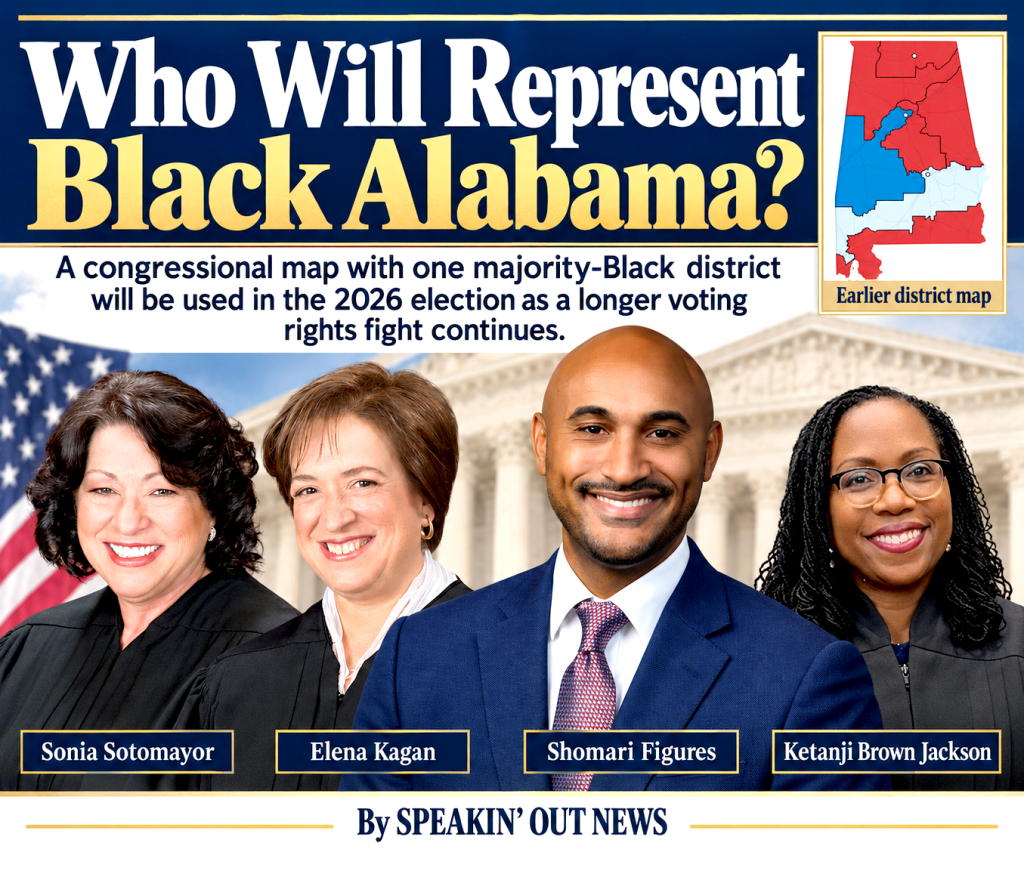
Alabama’s seven U.S. House districts have been the subject of years of litigation. In 2023, the U.S. Supreme Court upheld a finding that an earlier map unlawfully diluted Black voting strength under Section 2 of the Voting Rights Act. A court-ordered map then created a second district where Black voters could elect a preferred candidate. That decision appeared to mark a turning point for representation.
The legal ground shifted in 2026. After changing the standards governing Section 2 map challenges in Louisiana v. Callais, the Supreme Court set aside lower-court injunctions that had prevented Alabama from using a congressional plan enacted in 2023. That plan has one district with a majority-Black population. The justices later paused another lower-court order blocking the plan while the litigation continued, allowing the state to proceed with it for the election.
The Court’s June action was interim relief during the case, rather than a final ruling that every challenge to the plan had ended. That distinction is crucial. It explains how an election can proceed under a map while arguments about the map remain before the courts.
The majority said the lower court had not properly applied the new legal standard. Under that standard, plaintiffs proposing an alternative map face stricter requirements concerning state districting goals and proof that voting patterns reflect race rather than party affiliation. The majority also emphasized the disruption of changing election rules as voting approached.
Three justices dissented. Justice Sonia Sotomayor, joined by Justices Elena Kagan and Ketanji Brown Jackson, warned that allowing the state’s plan to proceed would undermine Black voters’ protection and create confusion during an election already in motion. Their disagreement shows how sharply the Court remains divided over both the map and the timing of a remedy.
Rep. Shomari Figures, a Democrat whose election followed use of the court-ordered district, has criticized the Court’s direction in the case and warned about its implications for Black political representation. State officials, meanwhile, have sought to use the map enacted by Alabama lawmakers. The dispute joins two questions that should be kept separate: which map governs this election, and which map will ultimately survive the legal challenge.
The immediate effect reaches voters well before Election Day. Alabama held special congressional primaries on August 11 in Districts 1, 2, 6 and 7. The Secretary of State lists the general election for November 3 and provides election information and sample ballots for voters. Anyone unsure of a district or polling place should use the state’s current election information, especially if they remember boundaries from an earlier election.
The larger consequence may extend beyond 2026. The courts’ eventual resolution could shape how Alabama draws districts and how Black voters challenge maps they believe weaken their voice. It could also affect how communities in the Black Belt and elsewhere are joined or divided for years to come.
No map guarantees that a voter’s preferred candidate will win. The Voting Rights Act question is whether the political process gives voters an equal opportunity to participate and elect a candidate of their choice.
As Alabama approaches November, readers deserve clarity on the map in use, the contests on their ballots and the case still unfolding. The boundaries may be settled for this election’s administration, but the fight over fair representation is far from settled.
Sources: U.S. Supreme Court decisions in Allen v. Milligan and Allen v. Caster; Alabama Secretary of State’s 2026 election information; Office of U.S. Rep. Shomari Figures.


