


By SPEAKIN’ OUT NEWS (Sources: Outdoor Alabama and Alabama Department of Public Health)
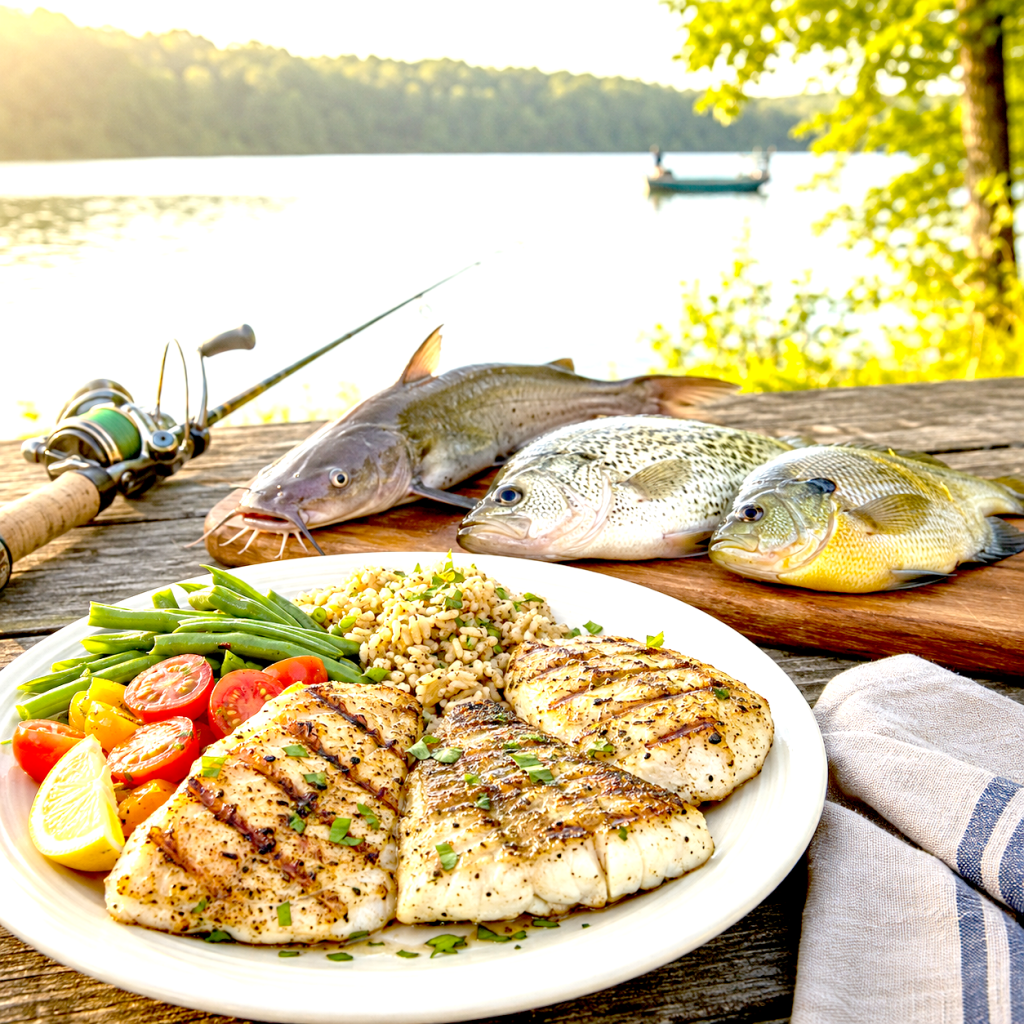
From the Tennessee River to Lake Guntersville and countless neighborhood ponds, fishing remains part of Alabama’s culture. But which freshwater fish offers the best nutritional catch?
Freshwater fish provide high-quality protein, vitamins, and minerals while generally containing less saturated fat than many red and processed meats. Some varieties also supply omega-3 fats that support heart and brain health.
For Alabamians, farm-raised catfish is one of the most practical choices. It is affordable, widely available, and low in mercury. Catfish can be caught throughout Alabama and is also commercially raised within the state. Baking, grilling, or air-frying it is healthier than deep-frying.
Crappie, bluegill, and other sunfish—commonly called bream—are also popular Alabama catches. They provide lean protein and have a mild flavor. Freshwater drum offers another nutritious option when taken from unrestricted waters.
Rainbow trout provides more omega-3 fat than many warm-water species, but it is available only in limited Alabama locations. Trout are stocked in the cold Sipsey Fork below Lewis Smith Dam and may survive in managed ponds during colder months.
Yellow perch and walleye exist in Alabama but are less common. Tilapia, while nutritious and low in mercury, is generally purchased commercially rather than caught in Alabama lakes and rivers.
Where a fish was caught is as important as its species. Mercury, PCBs, and other contaminants can accumulate in fish from affected waterways. Large, older predatory fish may carry higher concentrations.
Before eating a locally caught fish, residents should check Alabama’s 2026 fish-consumption advisories for the specific waterway, species, and serving limit. Cooking does not remove mercury.
For the healthiest meal, choose fish from approved waters, remove visible fat when appropriate, and bake, grill, broil, or air-fry it instead of deep-frying.