

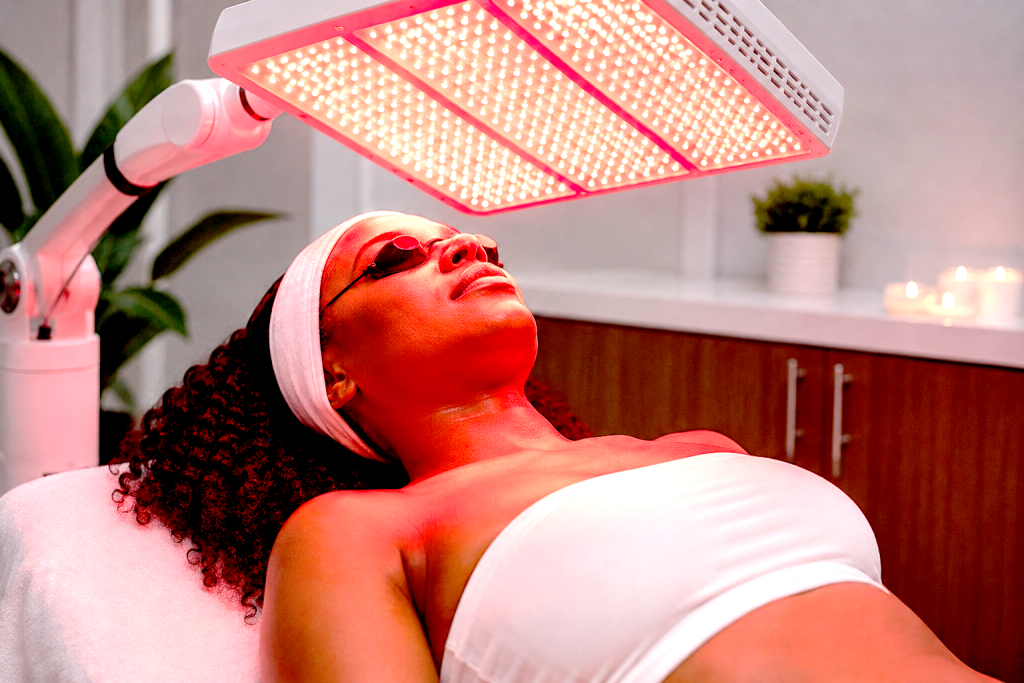
Once found primarily in medical offices and athletic training facilities, red light therapy is becoming increasingly popular among people looking to improve their health, reduce signs of aging and speed recovery naturally.
Also known as low-level light therapy (LLLT) or photobiomodulation, the treatment uses specific wavelengths of red and near-infrared light to penetrate the skin and stimulate the body’s cells. Researchers believe the light helps mitochondria—the “powerhouses” of cells—produce more energy, supporting the body’s natural repair processes.
Studies suggest red light therapy may help reduce inflammation, relieve minor muscle and joint pain, improve circulation and promote wound healing. It has also gained attention in the beauty industry for its potential to boost collagen production, soften the appearance of fine lines and wrinkles, improve skin texture and reduce acne-related inflammation.
Athletes often use red light therapy to aid muscle recovery after intense workouts, while some users report improvements in sleep quality and overall wellness. Scientists continue to study its potential benefits for hair growth, nerve health and other medical conditions, although more research is needed in several areas.
Experts emphasize that red light therapy is not a cure-all and should not replace medical treatment for serious health conditions. Results vary depending on the individual, the condition being treated and the quality of the device used.
When used as directed, however, many health professionals consider red light therapy a promising, noninvasive option that may complement a healthy lifestyle focused on nutrition, exercise and regular medical care.