


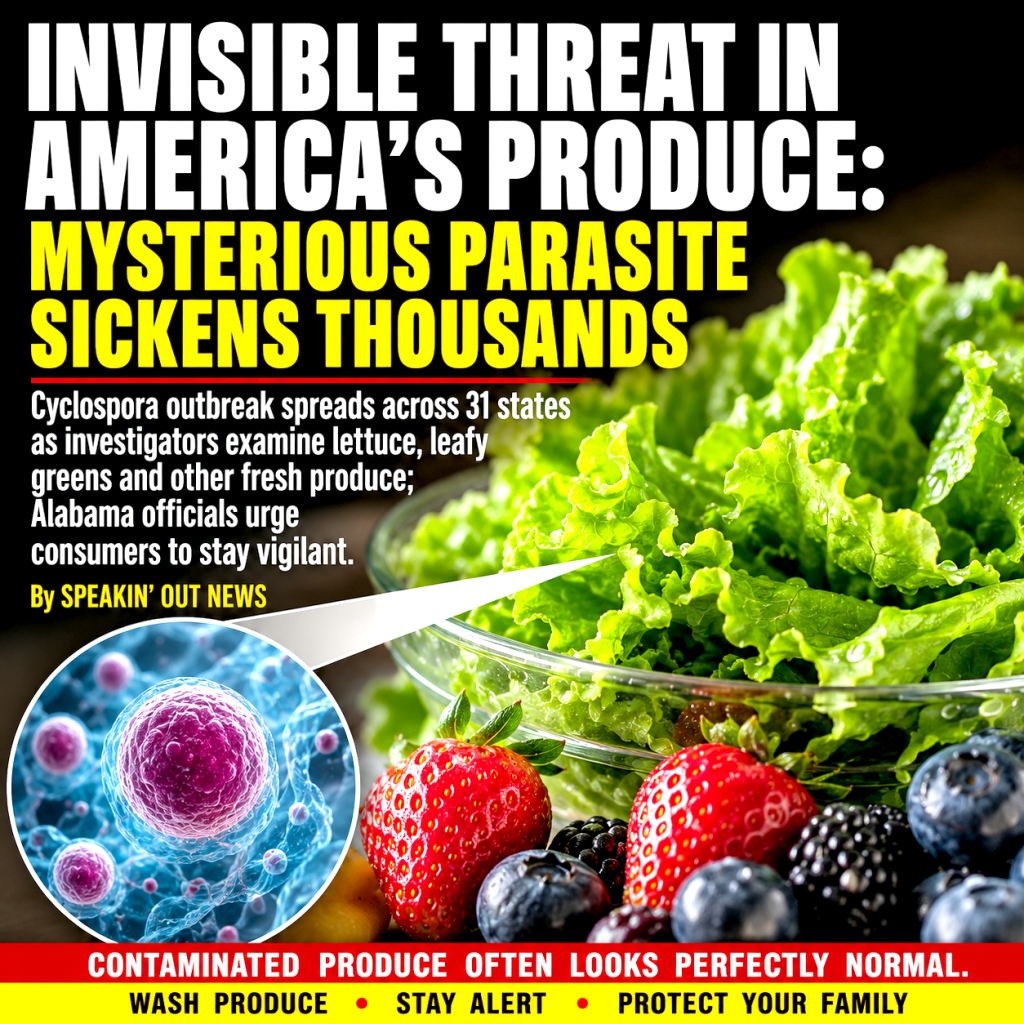
A microscopic parasite that cannot be seen, smelled or tasted is quietly making thousands of Americans sick this summer, prompting one of the nation’s largest Cyclospora investigations in recent years and renewing concerns about the safety of fresh produce.
Health officials have confirmed illnesses in 31 states, with Michigan reporting the largest number of cases. Investigators are examining fresh produce—including lettuce, leafy greens, herbs, berries and other fruits and vegetables commonly eaten raw—as they work to identify the source of the outbreak.
The growing investigation follows concerns already reported in Alabama, where the Alabama Department of Public Health has confirmed 11 Cyclospora cases since May 1, including 10 in North Alabama, underscoring that the state’s residents are not immune to the national outbreak.
Unlike many stomach illnesses, Cyclospora usually does not spread from person to person. Instead, people become infected after eating food or drinking water contaminated with the microscopic parasite.
What Is Cyclospora?
Cyclospora (Cyclospora cayetanensis) is a single-celled parasite that infects the small intestine. Once swallowed, it causes inflammation that can lead to prolonged gastrointestinal illness lasting for weeks if left untreated.
One reason outbreaks are difficult to trace is that symptoms often do not appear until seven to 14 days after exposure.
Common symptoms include:
• Watery diarrhea
• Frequent bowel movements
• Stomach cramps
• Nausea
• Bloating and gas
• Loss of appetite
• Fatigue
• Weight loss
• Low-grade fever
Without treatment, many patients experience recurring cycles of illness that can last for more than a month.
Who’s Most at Risk?
Although anyone can become infected, health experts say severe illness is more likely among:
• Adults age 65 and older
• Young children
• Pregnant women
• People with weakened immune systems
•Individuals with chronic health conditions
The greatest danger is often dehydration caused by prolonged diarrhea.
Foods Most Commonly Linked to Cyclospora
Federal investigators have not yet identified the exact source of this year’s outbreak, but previous investigations have frequently traced Cyclospora to fresh produce eaten raw, including:
• Romaine lettuce
• Iceberg lettuce
• Bagged salad mixes
• Spinach and mixed leafy greens
• Cilantro
• Basil
• Parsley
• Strawberries
• Raspberries
• Sugar snap peas
• Snow peas
•Fresh vegetables served in salads
Because these foods are often eaten without cooking, the parasite can reach consumers if contamination occurs during growing, harvesting, processing or packaging.
You Can’t See It
One of the biggest challenges with Cyclospora is that contaminated produce often looks completely normal.
The parasite is microscopic, meaning lettuce, herbs and berries may appear fresh while still carrying harmful organisms.
Throw produce away if it has:
• Slimy or sticky surfaces
• Mold growth
• Brown or black spots
•Wilted or mushy leaves
• Sour or unpleasant odors
• Excess moisture inside the package
• Unexpected discoloration
Even vegetables that look perfectly fresh can still carry Cyclospora.
Does Washing Produce Help?
Yes—but only partially.
Health experts recommend:
• Wash hands before handling produce.
• Rinse fruits and vegetables under cool running water.
• Never use soap, bleach or household cleaners.
• Rub firm produce while rinsing.
• Use a clean produce brush on firm-skinned vegetables.
• Dry produce with a clean towel or paper towel.
• Refrigerate leafy greens and cut fruits promptly.
Although washing reduces risk, experts say it cannot guarantee the parasite has been completely removed, especially from leafy greens with folds and crevices.


