


By SPEAKIN’ OUT NEWS
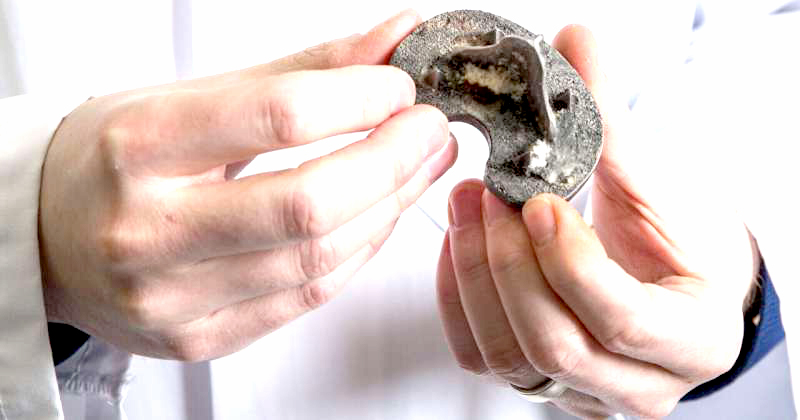
A new study is providing insight into why some hip and knee replacements deteriorate over time, helping researchers better understand how artificial joints interact with the human body.
Scientists from the University of Western Ontario and the London Health Sciences Center Research Institute analyzed more than 240 retrieved hip and knee implant components to determine how wear, corrosion, and patient-related factors contribute to implant failure.
Researchers found that the most common form of damage was a process known as tribocorrosion, which occurs when movement and body chemistry combine to gradually wear down implant surfaces. Every step a patient takes can temporarily disrupt the protective oxide layer that naturally forms on metals such as titanium, exposing the surface to chemical reactions inside the body.
The study also revealed that patient-specific factors can influence implant durability. Higher body weight, elevated body mass index, longer surgical procedures, and infections were associated with increased surface damage in some implants. Other conditions, including inflammatory arthritis, appeared to be linked to lower levels of wear in certain cases.
Researchers noted that proteins in the body play an important role as well. Once an implant is placed, proteins quickly coat its surface and influence how surrounding tissues respond. Depending on the circumstances, these proteins may help protect the implant or contribute to degradation.
Despite the findings, experts emphasize that hip and knee replacements remain highly successful for most patients and often provide years of improved mobility and pain relief.
The researchers hope their work will help manufacturers develop more durable implants while giving surgeons additional information to make treatment decisions tailored to individual patients.