

SPEAKIN’ OUT NEWS
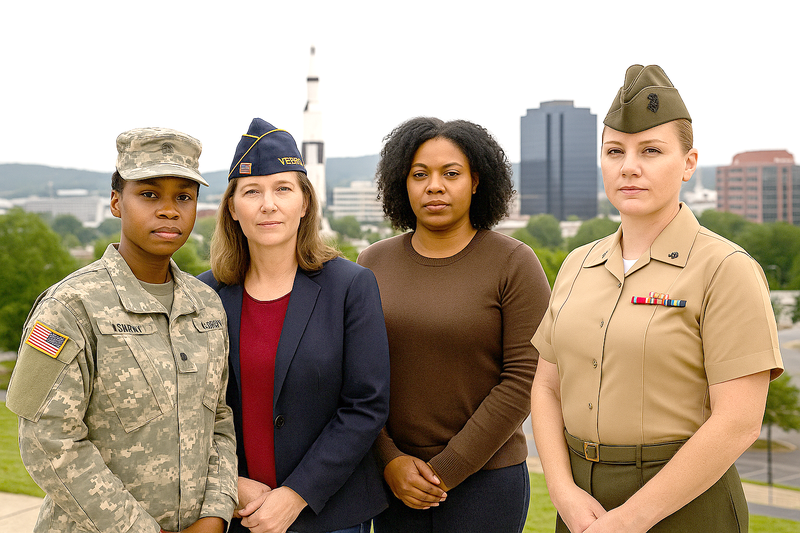
HUNTSVILLE, Ala. — Alabama is home to more than 377,000 veterans, and 43,220 of them are women. That means more than one in every ten Alabama veterans is female. Yet only 18,492 women veterans are enrolled in VA healthcare, and just 14,215 actually received care in the past year.
That leaves tens of thousands of Alabama’s women veterans navigating life without consistent access to the benefits and medical services they’ve earned.
“Women veterans have historically been overlooked and underserved,” said Nancy Espinosa, National Commander of Disabled American Veterans (DAV). “While VA has made tremendous progress… there is still much to be done.”
Mental Health Gaps and Trauma Support
Women veterans face disproportionate mental health challenges. Studies show they suffer from PTSD, depression, and anxiety at higher rates than men, often linked to military sexual trauma (MST). Nationally, 1 in 3 women veterans report experiencing MST during service.
Earlier this year, Invisible Warriors, a Huntsville nonprofit, launched Alabama’s first women-only PTSD support group.
Founder Nancy Becher explained:
“A lot of the veterans are feeling like they’re just being thrown away right now… we want them to know that we’re here for them.”
But support for these initiatives is inconsistent. At a recent veterans’ expo organized by the group, fewer than half of the expected vendors showed up. Becher called this a “worrisome trend of declining visible support for veterans.”
Recognition and Visibility
Beyond healthcare, Alabama’s women veterans struggle for visibility. Many do not even identify themselves as veterans, a problem fueled by decades of male-centered military culture. The VA’s “I Am Not Invisible” campaign highlights this lack of recognition, stressing that women veterans are underrepresented despite being more than two million strong nationwide.
Local efforts try to change that. Last November, Alabama held its Women Veterans Celebration across four Vet Centers. Attendee Ginger Branson said the event was a rare opportunity:
“Being a veteran gives me an opportunity to reflect, but it also gives me a chance to connect with other veterans.”
Still, without regular outreach and representation, many women feel left out of the veteran community.
The Stark Reality in Alabama
• 43,220 women veterans live in Alabama.
• Only 18,492 are enrolled in VA healthcare.
• Just 14,215 actually received VA care last year.
• Women make up 13% of homeless veterans, though they represent only 11% of the total veteran population.
These figures show that Alabama’s women veterans are not a small subgroup—they are a substantial community, yet too many remain outside formal care and support systems.
What Comes Next
Advocates say addressing these challenges requires both policy reform and community engagement. The VA has expanded services like maternity care, menopause management, and MST counseling. But staffing shortages, long waits, and lack of awareness still keep many women from receiving timely help.
Espinosa of DAV put it plainly:
“If we don’t provide sufficient funding and resources, women veterans will continue to fall through the cracks.”
Meanwhile, grassroots groups like Invisible Warriors are stepping up, but they cannot replace systemic solutions.
Bottom Line
With over 43,000 women veterans in Alabama, their needs can no longer be treated as secondary. They are mothers, daughters, leaders, and warriors who served their country honorably. Yet too often, they remain unseen.
“If Alabama can’t meet the needs of more than 40,000 women who served this country, then we are failing a significant part of our veteran family,” Becher said.
Until Alabama fully recognizes and supports its women veterans, their service—and their struggles—risk remaining invisible.