

By Nedra Rhone, The Atlanta Journal-Constitution
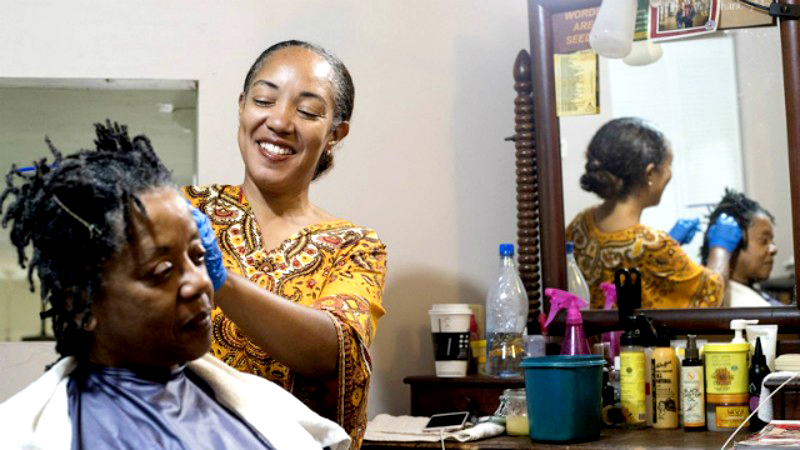
Black women are potentially exposed to dozens of hazardous chemicals through the products they use on their hair, according to a recent study from Silent Spring Institute, a nonprofit dedicated to identifying and breaking the links between environmental chemicals and women’s health.
The study, which measured a range of hormone-disrupting chemicals in hair products marketed to black women, is one of several studies in recent years that have brought increased attention to an overlooked concern.
“We know from previous research that black women suffer disproportionately from hormone-related health problems,” said the study’s lead author, Jessica Helm. “The study tested hair products used by black women to see if they could be a source of some of the chemicals of concern.”
In 18 different hair products including hot oil treatments, leave-in conditioners and hair relaxers, a total of 45 endocrine disrupters were found, with each product containing from four to 30 of the target chemicals. Eleven of the products contained seven chemicals prohibited in the European Union or regulated under California’s Proposition 65, the 1986 act enacted to help Californians protect themselves from exposure to chemicals that cause cancer, birth defects or other harm.
While more research is needed to determine the extent to which women are exposed to these chemicals, the study is an important step in helping researchers understand why black women may experience early puberty and have higher rates of hormone-related issues such as uterine fibroids, infertility and pre-term births, Helm said.
Black women looking to find safer options for hair products do have some resources and guidelines.
“Look for opportunities to use fewer products,” Helm said. “When choosing a product, know which products are made with plants or that are fragrance-, phthalate- and paraben-free.” The institute has developed Detox Me, a free mobile app that offers tips for reducing exposure to harmful chemicals in personal care products.
In 2017, African-Americans spent $54 million of a total $63 million on ethnic hair and beauty aids, according to data from Nielsen. Black shoppers also spent more in the general beauty marketplace. Last year, their spending accounted for $473 million of the $4.2 billion hair care industry. Despite their disproportionate spending in the category, there has been little research on the impact these products could have on black women’s health. Some black women have said they suspected the dangers of black hair products long before they had scientific data to back it up.
In 2016, the Environmental Working Group (EWG), which helps consumers lead healthier lives through research and education, tested more than 1,100 products marketed to black women and tracked the toxicity of ingredients in its Skin Deep Database. The results revealed that black women who wanted to shop within the products marketed to them had fewer safe choices, said Nneka Leiba, director of Healthy Living Science for the EWG. Only 25 percent of the tested products for black women rated at the lowest level of toxicity compared to more than 40 percent of tested products in the general market.
Both the EWG and Silent Spring found hair relaxers to be among the biggest offenders. Up to 30 endocrine-disrupting chemicals were found in one relaxer sample, Helm said. Hair dyes also got low ratings from the EWG. But even chemicals considered less egregious such as parabens, which prevent bacterial growth, and diethyl salate, a solvent in fragrances, are associated with endocrine disruption and can be increasingly toxic the more products you use.