

By SPEAKIN’ OUT NEWS
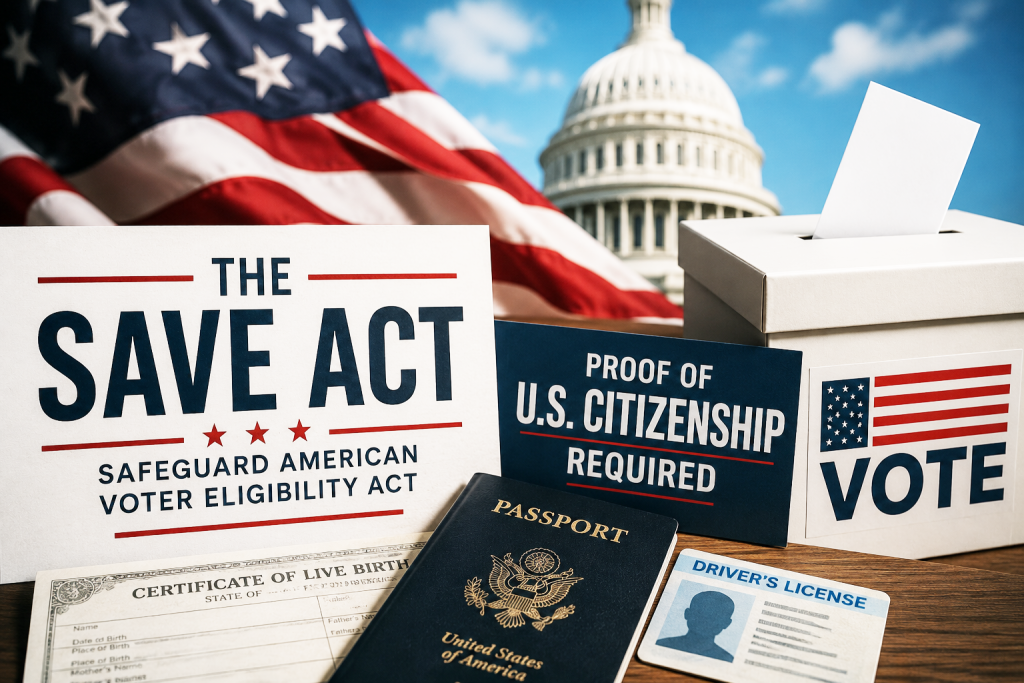
As debate continues over election security and voter access, the proposed Safeguard American Voter Eligibility (SAVE) Act has become one of the nation’s most closely watched voting measures. Supporters say it would strengthen election integrity, while critics warn it could make voter registration more difficult for some eligible Americans.
The legislation would require individuals registering to vote in federal elections to provide documentary proof of U.S. citizenship, such as a U.S. passport, a birth certificate paired with qualifying identification, or other approved documents. It would also establish a nationwide requirement for voters to present an acceptable photo ID when casting ballots in federal elections.
The bill would require states to verify citizenship before registering voters, establish procedures for applicants unable to immediately provide documentation, and regularly remove noncitizens from voter registration rolls. It also creates penalties for officials who knowingly violate the law.
Supporters argue the measure would help ensure that only U.S. citizens vote in federal elections and would create a uniform national standard for voter registration and identification. They say the proposal is intended to increase public confidence in election results.
Opponents counter that documented cases of noncitizen voting are rare and warn that the documentation requirements could make registration more difficult for some eligible voters, including people whose legal names differ from their birth certificates, military members stationed away from home, naturalized citizens, and individuals who do not readily possess citizenship documents.
The proposal has passed the U.S. House but has not become law. As of this week, it remains stalled in the Senate while President Donald Trump continues urging Congress to approve it before future federal elections.