

SPEAKIN’ OUT NEWS
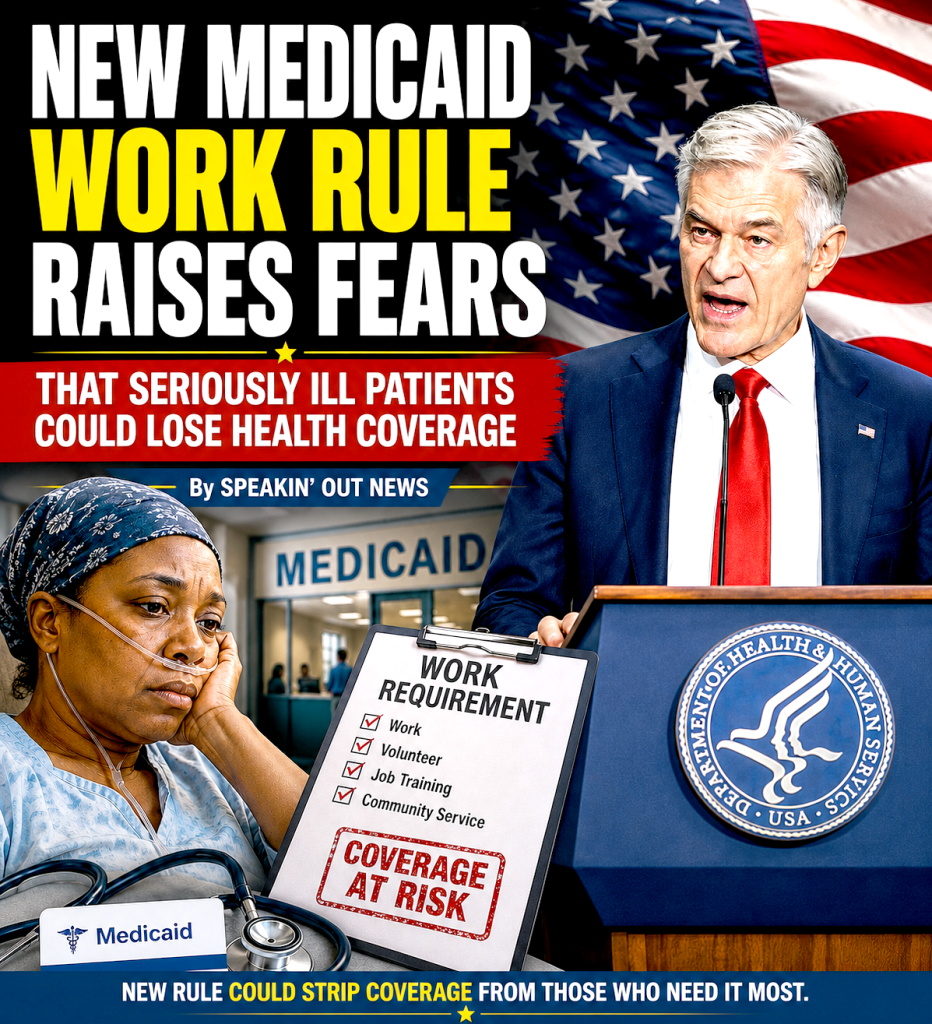
WASHINGTON — A new federal rule tied to upcoming Medicaid work requirements is raising concerns among state officials, healthcare providers and patient advocates who fear that some seriously ill and disabled Americans could lose their health insurance because of new paperwork requirements.
Beginning in January 2027, states that expanded Medicaid under the Affordable Care Act must require many able-bodied adults to work, attend school, volunteer or participate in job training for at least 80 hours each month to keep their coverage under the One Big Beautiful Bill Act signed by President Donald Trump.
While the law exempts recipients considered “medically frail,” new guidance issued by the Centers for Medicare & Medicaid Services (CMS) narrows that definition. Instead of qualifying based solely on a serious illness or disability, many applicants will now have to prove their medical condition significantly limits their ability to work.
CMS Administrator Dr. Mehmet Oz said the policy is designed to encourage employment while protecting those who truly cannot work.
“This rule helps Americans build skills and independence through work, education, job training, or community service, creating new opportunities for themselves and their families,” Oz said.
State Medicaid officials say the change creates a more complicated system that could leave eligible recipients without coverage simply because they cannot complete the required documentation.
Healthcare providers also worry they will be asked to perform disability and employability evaluations they are not trained—or reimbursed—to conduct.
Meanwhile, 25 states and the District of Columbia have filed a federal lawsuit challenging the work requirement and the new “medically frail” standard.
California, North Carolina and Colorado are among the states developing new computer systems, text alerts and outreach campaigns to help eligible residents maintain coverage. Even so, officials fear thousands—possibly millions—could lose Medicaid because of paperwork errors or confusion rather than ineligibility.
Supporters argue the policy promotes self-sufficiency and workforce participation. Critics counter that the added administrative hurdles could unintentionally strip healthcare coverage from vulnerable Americans who still qualify for Medicaid.
The new rules are expected to reshape Medicaid enrollment nationwide over the next several years as states race to meet the federal implementation deadline.


