


By SPEAKIN’ OUT NEWS
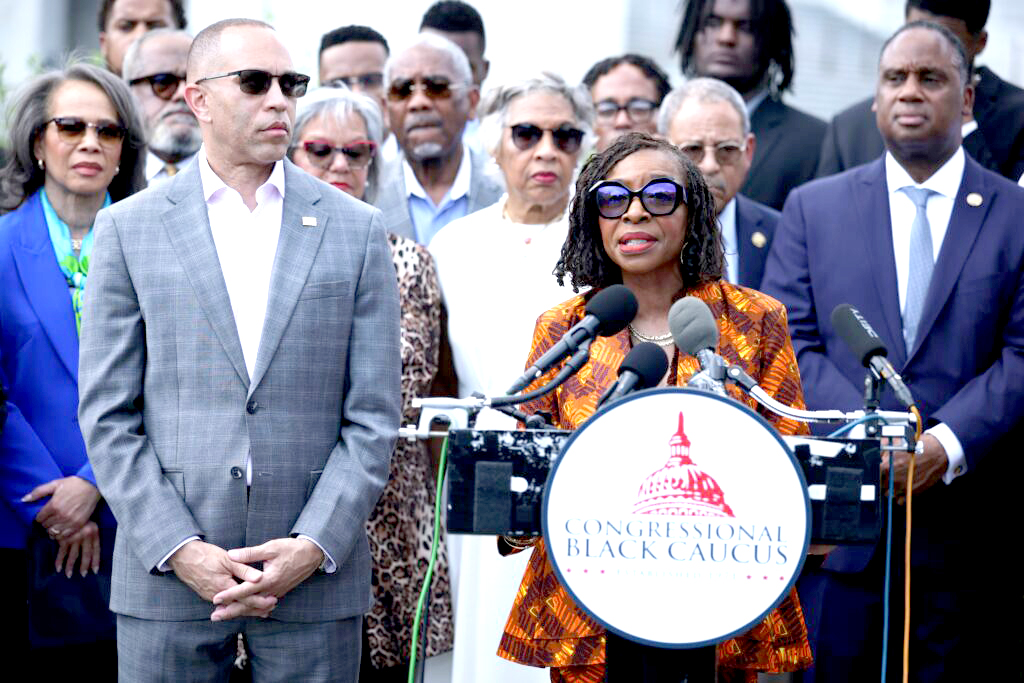
WASHINGTON — The future of Black political representation in Congress is drawing renewed attention after a recent U.S. Supreme Court ruling and a wave of congressional redistricting efforts that could reshape elections across the country, including Alabama.
Leaders of the“organization”,“Congressional Black Caucus”,“United States Congress”]say the changes threaten decades of progress made since passage of the “historical_event”,“Voting Rights Act of 1965”,“United States voting rights law”]. Today, the caucus has 60 members and has played a major role in advancing legislation involving health care, education, civil rights and funding for historically Black colleges and universities.
The debate intensified after the U.S. Supreme Court’s decision in “court_case”,“Louisiana v. Callais”,“2026 U.S. Supreme Court case”], which narrowed protections previously used to challenge some congressional district maps. Since the ruling, several Republican-led states have approved new congressional maps that critics say could reduce the number of majority-Black districts. Alabama is among the states affected by the decision.
Congressional Black Caucus Chair called the changes a serious setback for Black voters, while conservatives argue the ruling restores equal treatment under the Constitution by limiting race-based district drawing.
Political analysts say the outcome of the November elections will determine whether the caucus maintains its influence in Congress or faces a smaller voice in shaping national policy. The debate is expected to remain at the center of voting rights discussions as states continue redrawing congressional districts and preparing for future elections.