

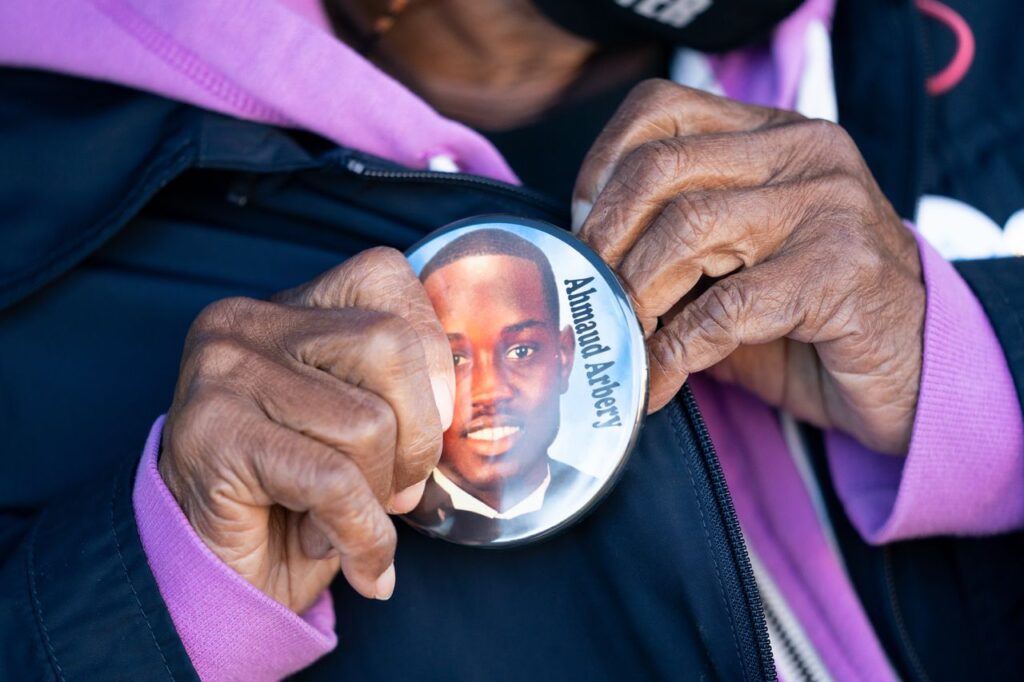
It happened. Yes, it did.
In the South. Yes, it did.
In Brunswick, Ga. No, in Glynn County, Ga. In a place where only one in four citizens is Black. Yes, it did.
A jury packed with 10 whites and just one Black pronounced three white men guilty of murdering a Black man. In the South. Yes, it did.
It was a long time coming. Too long.
Not just for Ahmaud Arbery—for a Black man jogging on February 23, 2020. Jogging through Satilla Shores when Travis McMichael, his father Gregory, and William “Roddie” Bryan decided he looked suspicious (every Black man in America has been tagged such at some juncture of their lives, me included). They hunted him down in two pickup trucks, wrestled with him, and murdered him.
Because he looked suspicious. Yes, they did.
So deemed this jury of 11 whites and one Black on Wednesday. So deemed even after defense attorneys resurrected centuries of racist courtroom tactics. Demeaning, insulting courtroom tactics.
“We don’t want any more Black pastors coming in here … sitting with the victim’s family, trying to influence the jurors in this case.”
That was defense attorney Kevin Gough. Yes, it was. Trying to influence the judge and jurors, no doubt. Even though the 11 whites and one Black were not, thankfully, in the courtroom at the time.
“Turning Ahmaud Arbery into a victim … in his khaki shorts with no socks to cover his long, dirty toenails.”
That was defense attorney Laura Hogue, demonizing defense attorney Laura Hogue during the closing argument. Her desperate closing argument. Yes, it was.
The 11 whites and one Black were not swayed by the racist dog-whistles. Dog whistles, as you know, produce sounds at frequencies dogs can hear, but not humans.
The 11 whites and one Black weren’t hearing it, either. No, they weren’t.
Not like so many all-white juries for more than a century. In the deep South. Juries comprising jurors who certainly were not peers of any Black man, or men, on trial. Yet buddies of any white defendant.
Juries compiled after Blacks were systemically excluded, dropped from even the selection pool, until that was ruled illegal by the U.S. Supreme Court in Norris vs Alabama. In 1935.
That was four years after the case that was the spark that led to Norris.: When an all-white male jury convicted the Scottsboro Boys—nine Black teenagers, the youngest being just 13—of raping two white women in Jackson County, Alabama. (Their awful saga would endure for years, for decades, and is said to have helped shape Harper Lee To Kill a Mockingbird.)
Norris didn’t stop the practice of excluding Black jurors, of course. Excluding them from trials when either the victim or defendant was Black—as if we cannot be impartial and judge a case on its merits. As if we could not do what so many white jurors for too long refused to do.
In 1985, the Supreme Court, in Batson vs. Kentucky, exposed peremptory challenges—the ability to eliminate a juror during selection for no reason—by ruling Black defendants could argue racial discrimination if they were convicted by a jury where Blacks were purposefully excluded.
Nearly two decades later, the Mississippi Supreme Court reversed the conviction of a Black man in a trial where the prosecutors used all 15 of its peremptory strikes to exclude Black jurors. “[R]acially motivated jury selection,” the court stated, “is still prevalent 20 years later.”
Yes, it was.
Tilted jury selection isn’t fading anytime soon. Tilted by race. Whether sitting at the defense or prosecution table, attorneys will still wield it and other racial tactics.
They will still blow dog whistles.
Yes, they will.
Only now, this time, 11 white and one Black juror weren’t hearing it.
“This case was about the facts.”
That was Linda Dunikoski, the lead prosecutor against the three men who murdered Ahmaud Arbery.
Yes, it was. Finally.