

Paul Gattis, The Associated Press
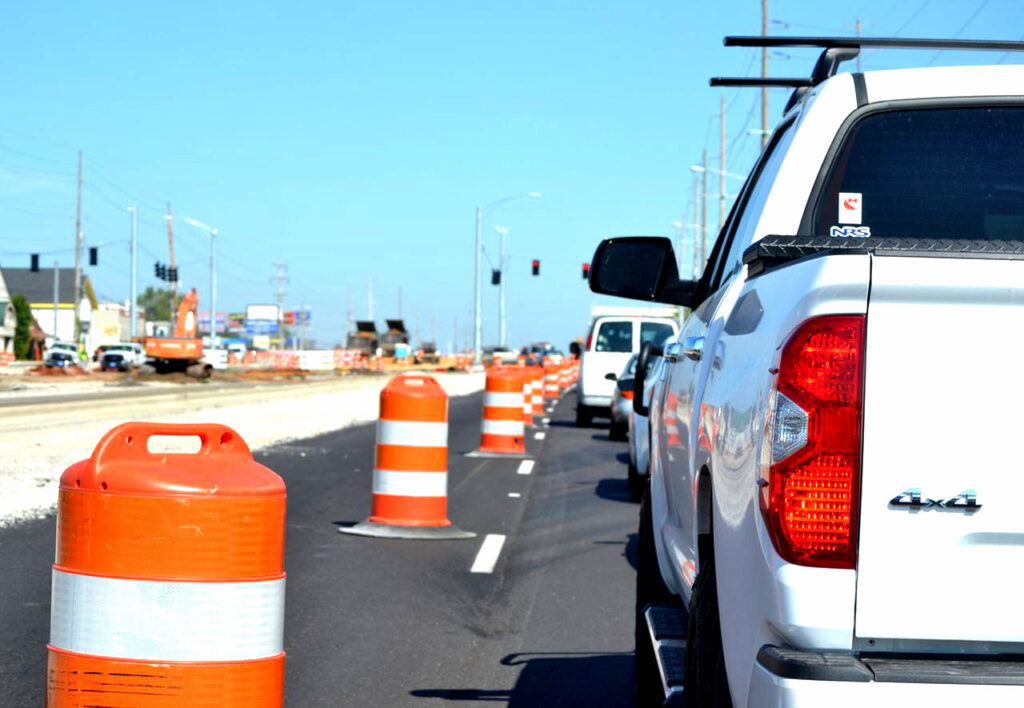
Huntsville’s city council put a priority on money for road resurfacing in the 2022 fiscal budget. (Paul Gattis)
The city of Huntsville’s proposed budget for the 2022 fiscal year provides for a 3 percent raise for all employees as well as a new $85 million city hall. There is also a near $1 million bump for outside non-profits and organizations.
There is also a 15 percent increase in funding for road resurfacing.
But in a three-hour work session last week to discuss the budget, members of the city council asked primarily for one thing: Still even more money for road resurfacing.
“I think other council members will tell you that, besides speeding, probably we hear more about the need to pave roads than anything else,” council President Jennie Robinson said. “We have a lot of neighborhoods that were built during very rapid expansion of the city in the 60s and 70s. Those roads were all built at the same time and those roads are all going bad at the same time. So we’ve got a lot of work to be done. Bringing that up to a 20 percent increase would mean a lot.”
She also said that more money for resurfacing would “meet the desire expressed by the council.”
Councilman Devyn Keith agreed, saying an even larger increase in resurfacing money would be “advantageous.”
Council members pointed to a presentation last month from the city’s Public Works Director, Chris McNeese, who said he believed a 20 percent increase in funding could be carried out by road crews.
The city’s 1990 Capital Improvement Plan allotted $13.5 million for road resurfacing. City Administrator John Hamilton presented the details for that budget and told the council he would look at shuffling some money around to make more available for resurfacing.
The council will vote on the budget at Thursday’s meeting.
The issue is not a lack of desire to put money into road resurfacing. Hamilton said it’s a matter of what can be achieved in a fiscal year and in his presentation, he said more money for resurfacing would not necessarily result in more resurfacing being done because of time and manpower limitations on private road crews hired to repave roads.
In 2021, Hamilton said the city spent about $9.3 million in road resurfacing and more money would not have yielded more results.
“Our sense right now is, the scope of the work we’re putting out there is absolutely stretching are paving companies,” Hamilton said.
Another roadblock to resurfacing, so to speak, is that the growing city is using those same road crews to build new roads in addition to resurfacing old roads, Hamilton said. Work demands from private companies – from their own roads to parking lots – is also cutting into available resurfacing crews.
“We are seeing it because of how rapidly we’ve grown, those companies are working to grow with the community, but they are going as hard as they can and they’re stretched,” Hamilton said. “So one of the things we’re having to be flexible with them on is timing, where typically we would want one of those repaving contracts done in six months. Sometimes we’re having to work with them to give them more time because they’ve got to meter out the work to physically execute it. They’re being stressed by (the declining) workforce just like everybody else is. So they’re going hard. They’re good partners, but they are absolutely stretched.”
Still, bumpy roads can make for grumpy drivers.
The city evaluates roads at least every two years and assigns “grades.” The roads with the worst grades move to the top of the resurfacing list. But the list does not come with infinite resources or manpower to meet every request for resurfacing.
“We are recommending $13.5 million,” Hamilton said. “And if I could make that $50 million, I’d love it. We’d all would love that. But (resurfacing crews) are just not capable of doing it. We don’t have that much of that money available anyway.”