

by Gemma Greene, BDO Staff Writer
Check whether or not a product has been EPA-certified by looking for an EPA Registration Number.
This is usually found on the back of a product’s label close to the manufacturer’s address. You can then check that number against the EPA’s “List N,” which includes all products certified as being effective against coronavirus.
New research from the Penn State College of Medicine, which was published in the Journal of Medical Virology, tested various household products to see if they could have any effect on “deactivating” the coronavirus, including a neti pot, peroxide sore-mouth cleansers, mouthwashes, and a 1% solution of baby shampoo.
While the neti pot and peroxide proved to be no match for COVID, the results showed that the baby shampoo solution—which is often used by head and neck doctors to rinse out sinuses—killed 99.9 percent of coronaviruses within two minutes of contact time, while mouthwash did the same in just 30 seconds.
In addition to the cleansers on the list we published during the summer of 2020, we also share these disinfectants below that have been proven to help:
Isopropanol or Ethanol (Alcohol) are effective disinfectants when used at a high enough concentration. Most cleaning products that contain alcohol have at least a 70% solution, and hand sanitizers should contain at least 60% alcohol to be effective.
They become less effective over time because the alcohol will evaporate.
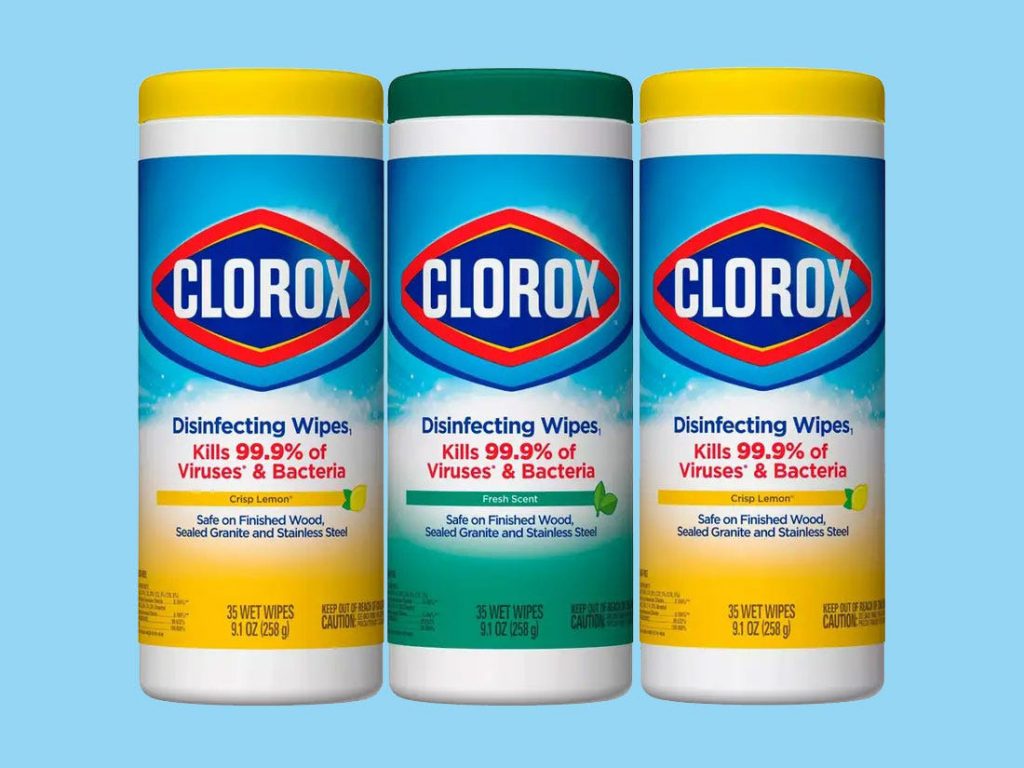
Quaternary Ammonium Compounds are widely used as surface disinfectants and can be found in many household cleaners including disinfectant wipes and sprays. Research has shown quaternary ammonium compounds to effectively kill most bacteria, viruses, and fungi.
Sodium Hypochlorite (Bleach). The active ingredient in bleach is sodium hypochlorite, which can kill viruses, bacteria, and fungi.
Bleach can be used on frequently touched surfaces like doorknobs and countertops but it must air dry for at least 10 minutes before wiping to effectively kill pathogens. Because bleach can irritate the skin, you should wear gloves when using it.
The CDC bleach recipe calls for a third-cup of bleach to one gallon of water. That’s four teaspoons of bleach per quart of water.
Take that solution and pour it in a deep container. Cut a roll of paper towels or shop towels in half, pull out the cardboard and submerge both halves. If you happen to have an empty Clorox wipes container, you can use that instead of a deep container. Or you can soak the paper towels and bleach solution in a Ziploc bag, and use it as a to-go bag. Bleach loses its disinfecting power after 24 hours, so only submerge the number of paper towels you’ll use in that time period in the container. not worth the risk.”