


By SPEAKIN’ OUT NEWS
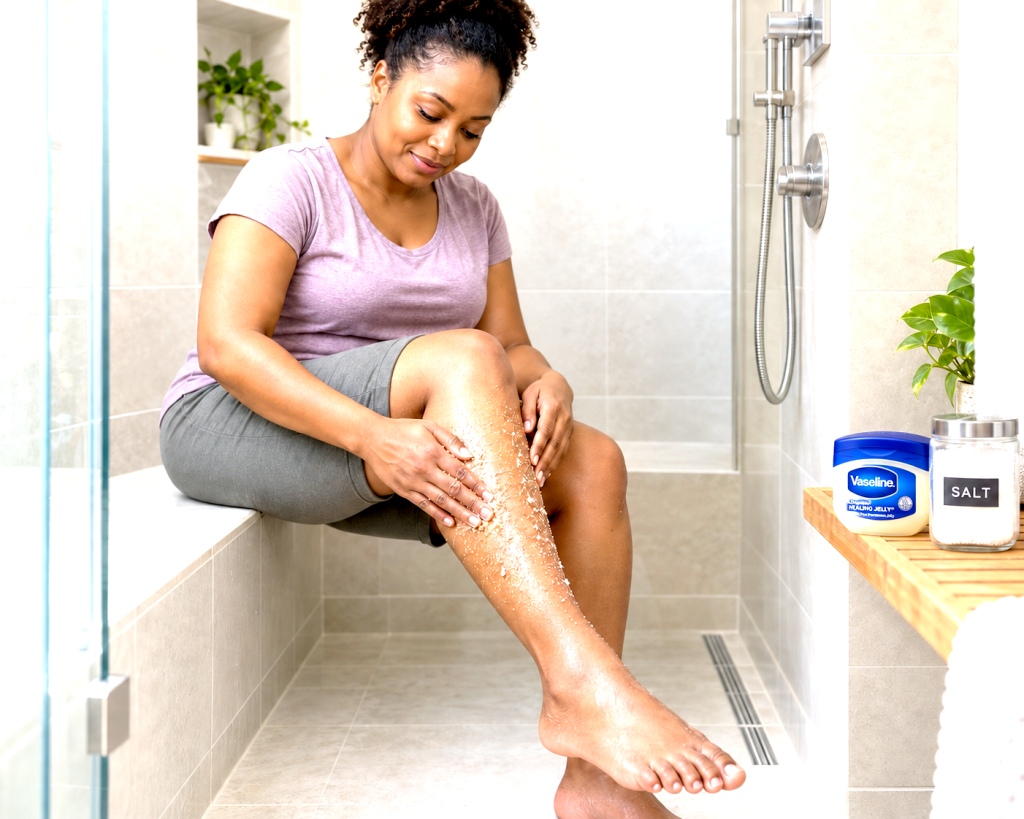
A homemade shower scrub made with petroleum jelly, commonly sold as Vaseline, and salt may leave skin feeling smooth. The salt physically rubs away loose surface cells, while the petroleum jelly can help seal moisture into skin. But the mixture has not been shown to treat a skin condition, and scrubbing too hard can cause irritation. aad.org
If you decide to try it, use a small amount on intact skin, rub lightly rather than scraping, and rinse with lukewarm water. Dermatologists advise keeping exfoliation gentle and applying moisturizer afterward. Stop if your skin stings, burns, or becomes red. aad.org
Keep these precautions in mind:
- Skip cuts, rashes, sunburn, and freshly shaved areas. Salt can sting, and exfoliating injured skin may make it worse.
- Avoid the face if your skin is sensitive or acne-prone. A gritty scrub may irritate it, and petroleum jelly can trigger breakouts for some people.
- Do not scrub diabetic feet. Reduced sensation can make an injury hard to notice. Check feet regularly and follow your diabetes care team’s skin-care advice.
- Clean the shower floor afterward. Petroleum jelly can leave a slippery residue. aad.org
For routine dryness, the simpler choice may be more effective: after bathing, apply plain petroleum jelly or a fragrance-free moisturizer while skin is still damp. You can get the moisture benefit without the friction of a salt scrub. If dryness is persistent, painful or accompanied by cracking, ask a health professional what is causing it. aad.org
Sources: American Academy of Dermatology, “How to Safely Exfoliate at Home” and “5 Ways to Use Petroleum Jelly for Skin Care”; American Diabetes Association, “Foot Complications”.