


By SPEAKIN’ OUT NEWS
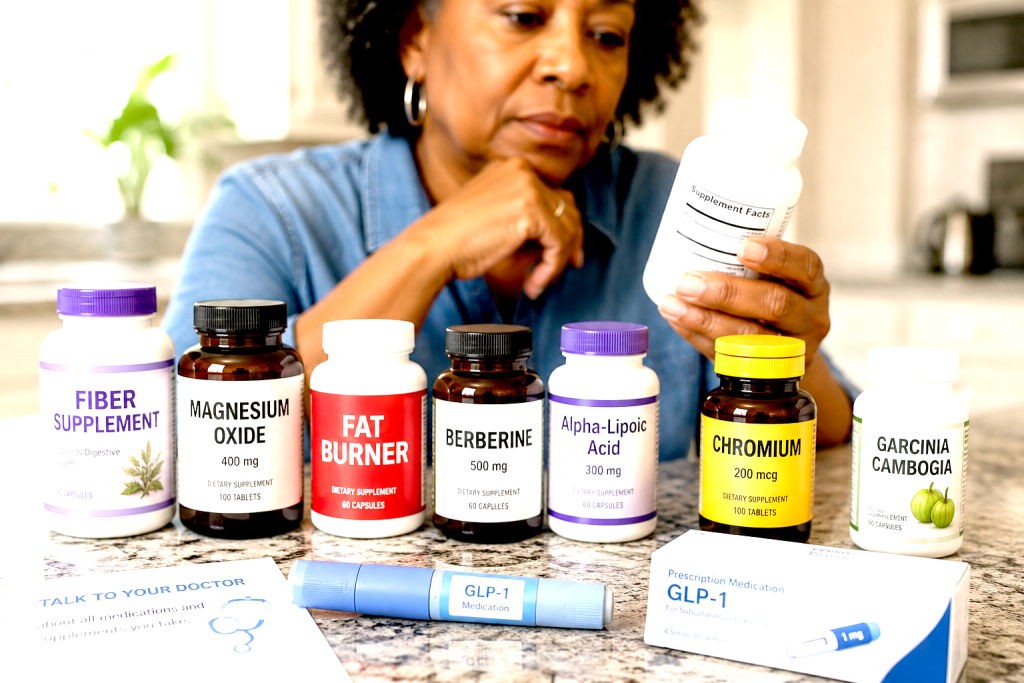
As the popularity of GLP-1 medications such as Wegovy, Ozempic, and Zepbound continues to grow, health experts are urging patients to be cautious about combining the drugs with certain dietary supplements.
GLP-1 medications help control blood sugar and promote weight loss by slowing digestion and reducing appetite. However, some supplements may worsen side effects or interfere with how the medications work.
Among the supplements experts recommend avoiding or discussing with a doctor are fiber supplements, magnesium oxide, fat burners, appetite suppressants, berberine, alpha-lipoic acid (ALA), chromium, and garcinia cambogia.
Large amounts of fiber supplements may increase bloating, gas, and stomach discomfort because GLP-1 drugs already slow digestion. Fat burners and appetite suppressants can intensify nausea and further reduce appetite, increasing the risk of poor nutrition.
Berberine, ALA, and chromium may also lower blood sugar levels. When combined with GLP-1 medications, they could increase the risk of hypoglycemia, or dangerously low blood sugar.
Experts are particularly concerned about garcinia cambogia, a weight-loss supplement that has been linked to serious liver problems and is not recommended by the U.S. Food and Drug Administration.
Researchers note that studies examining supplement interactions with GLP-1 medications remain limited. Because these medications affect how quickly the stomach empties, they may also alter how the body absorbs supplements and other medications.
Health professionals recommend telling your doctor and pharmacist about every supplement, vitamin, and over-the-counter medication you take. Doing so can help prevent unwanted side effects and ensure your treatment plan remains safe and effective.