


Niron Magnetics picks Dothan for its largest U.S. plant, a win that ties Alabama to the defense, aerospace and data-center supply chain
By SPEAKIN’ OUT NEWS
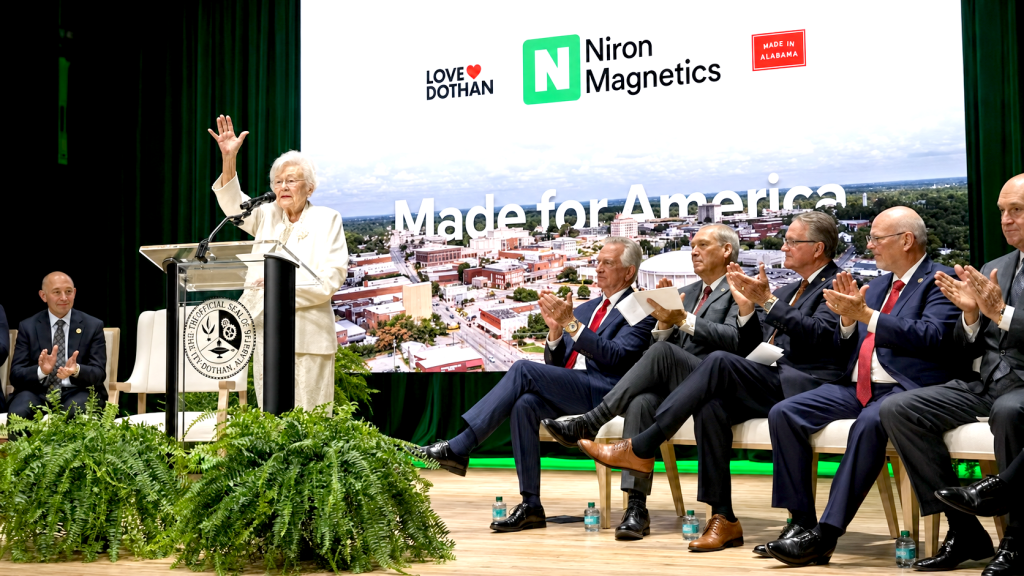
Alabama has landed one of its largest manufacturing investments in recent years. Gov. Kay Ivey announced Nov. 23 that Niron Magnetics, a Minneapolis-based company, will build a $1.8 billion advanced manufacturing campus in Dothan.
The 1.6-million-square-foot campus will sit on the city’s 446-acre Westgate Super Site. It is expected to create about 700 high-wage jobs within its first five years, according to the governor’s office. Construction is expected to begin in 2028, with production starting in 2029.
Niron makes permanent magnets from iron nitride instead of rare-earth metals, which are usually mined overseas. The magnets are used in data centers, aerospace and defense, automobiles and audio equipment. The Dothan plant will be the company’s largest, with annual capacity of 10,000 tons. A smaller plant in Sartell, Minnesota, is set to open in 2027.
“Niron Magnetics’ $1.8 billion investment in Dothan is tremendous news for the Wiregrass,” Ivey said. She added that “Alabama beat out 22 other states for this project.”
Dothan Mayor Mark Saliba called the project transformative. “A company like this one elevates our entire community,” he said.
Niron CEO Jonathan Rowntree said, “Alabama stood out from the very first conversation.”
Local partners received state SEEDS Act funding in 2023 to buy and prepare the property, and the site later received Growing Alabama Tax Credit allocations.
The announcement matters in North Alabama, too. Niron’s magnets serve the same aerospace, defense, and data-center industries that power Huntsville’s economy. Hiring is still years away, but job seekers and local suppliers can follow the project through the Alabama Department of Commerce and AlabamaWorks for updates as construction nears.