

Federal funding supports route analysis and public input as officials seek relief for Tennessee River traffic
By SPEAKIN’ OUT NEWS
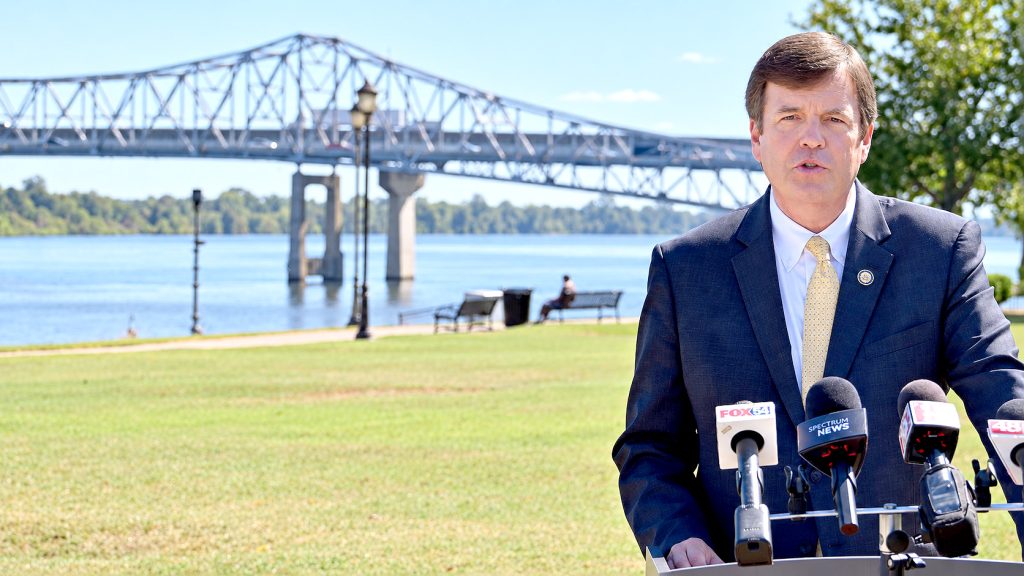
DECATUR, Ala. — Decatur’s effort to ease traffic across the Tennessee River is moving forward with $3 million in federal funding to study an additional crossing, a planning step toward addressing a longstanding transportation concern.
U.S. Rep. Dale Strong, R-Huntsville, joined Mayor Kent Lawrence and Alabama Department of Transportation representatives at Rhodes Ferry Park on Oct. 6 to discuss the investment.
The Consolidated Appropriations Act of 2026 included the funding. Strong advocated for the allocation through his work on the House Appropriations Committee.
“Improving our local infrastructure improves quality of life and enhances public safety, and I will never apologize for bringing our hard-earned tax dollars back home,” Strong said, according to the announcement.
The $3 million supports study work—not construction of a new bridge. Officials must evaluate possible routes, costs, and impacts before the project can move forward.
The study will examine bridge and connecting roadway alignments, traffic needs, environmental and engineering considerations, right-of-way requirements and effects on surrounding communities. Public input will also inform the process.
“Our residents deserve efficient and reliable infrastructure,” Lawrence said, pledging continued cooperation with state and federal partners.
From feasibility to a preferred route
The project aims to relieve congestion on the Capt. William J. Hudson “Steamboat Bill” Memorial Bridges and improve travel along the Alabama 20 and U.S. 31 corridors.
In a July 23 announcement, ALDOT said earlier feasibility work had identified potential crossing options.
“A previous feasibility study indicated there are viable options for another Tennessee River crossing,” ALDOT North Region spokesman Seth Burkett said.
The next corridor study will examine those options in greater detail, gather public feedback and develop a preferred alignment. It will also prepare engineering and environmental documentation required under the National Environmental Policy Act.
ALDOT previously estimated that the corridor study would take approximately two to three years once underway. The department expects to supplement Strong’s $3 million allocation with additional federal and state transportation funds.
Consultant selection will establish the study’s final scope and detailed cost estimate. Once completed, officials expect to have a preferred bridge alignment and preliminary construction estimate.
According to Strong’s office, ALDOT is moving through consultant procurement, and the study is expected to begin once that process is complete.
For commuters and businesses, the funding advances the search for a solution. A final bridge location, construction budget, and opening date remain to be determined.