


SPEAKIN’ OUT NEWS
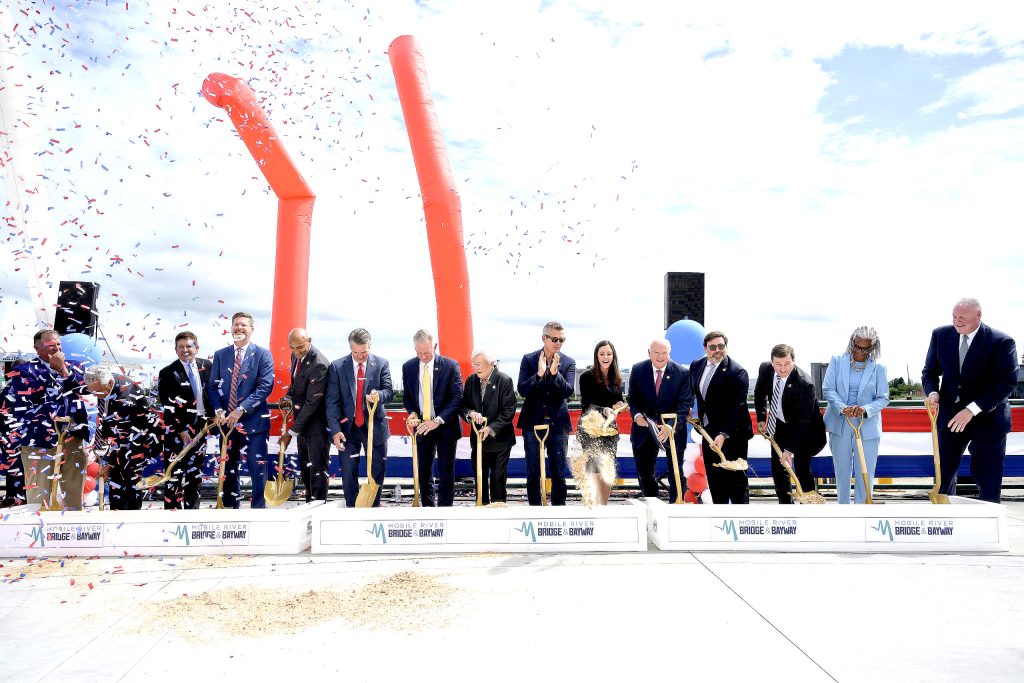
MOBILE — After nearly three decades of planning, Alabama’s largest transportation infrastructure project has reached a milestone: construction is moving forward on the Mobile River Bridge and Bayway, backed by a bipartisan coalition that includes Republican U.S. Sen. Katie Britt and Democratic U.S. Rep. Shomari Figures.
State, federal and local leaders gathered Oct. 2 at Cooper Riverside Park for the groundbreaking. The approximately $3.2 billion first phase promises to reshape a heavily traveled Interstate 10 corridor connecting Mobile and Baldwin counties, with consequences for commuters, businesses and freight moving through Alabama’s Gulf Coast.
For working families, the project offers the promise of improved travel but raises questions about what using the new route will cost. Those concerns surfaced in remarks at the celebration, as officials discussed federal support and the financing needed to move the project into construction.
Britt emphasized cooperation among different levels of government, describing the groundbreaking as the result of sustained work by numerous partners. The project’s official fact sheet identifies Britt and Figures among its federal supporters, alongside Republican Sen. Tommy Tuberville and Rep. Barry Moore. Gov. Kay Ivey and U.S. Transportation Secretary Sean Duffy also participated in the ceremony.
Figures highlighted another part of the funding history. According to FOX10’s coverage, he credited the Biden administration with helping secure more than half a billion dollars in funding. He also urged additional federal investment to lessen the financial burden on motorists who will eventually pay tolls.
His comments underscored a distinction between supporting construction and agreeing on how to distribute the costs. While officials celebrated the project’s progress, Figures argued that securing more federal dollars should remain a priority before the bridge opens.
The Alabama Department of Transportation said financing was completed in September, including a federal Transportation Infrastructure Finance and Innovation Act loan of $2.52 billion and bonds sold to investors. That federal assistance is a loan, rather than an outright grant covering the entire construction cost.
Phase One includes a new six-lane, cable-stayed bridge over the Mobile River, improvements to major interchanges, and restriping the existing Bayway to provide six lanes across Mobile Bay. A new Bayway structure is part of a future phase that requires additional funding.
Construction is expected to take approximately five years. The phased approach allows work to proceed while leaving part of the larger corridor plan for later development.
For Alabama readers, the groundbreaking represents both bipartisan progress and unfinished business. The bridge is moving toward reality; the next chapters will focus on construction, additional investment, and the costs families and businesses ultimately face when traveling the corridor.