

By SPEAKIN’ OUT NEWS (Source: Huntsville Business Journal)
Alabama community college students will gain access to new training on how artificial intelligence is used in manufacturing under a statewide partnership announced Tuesday.
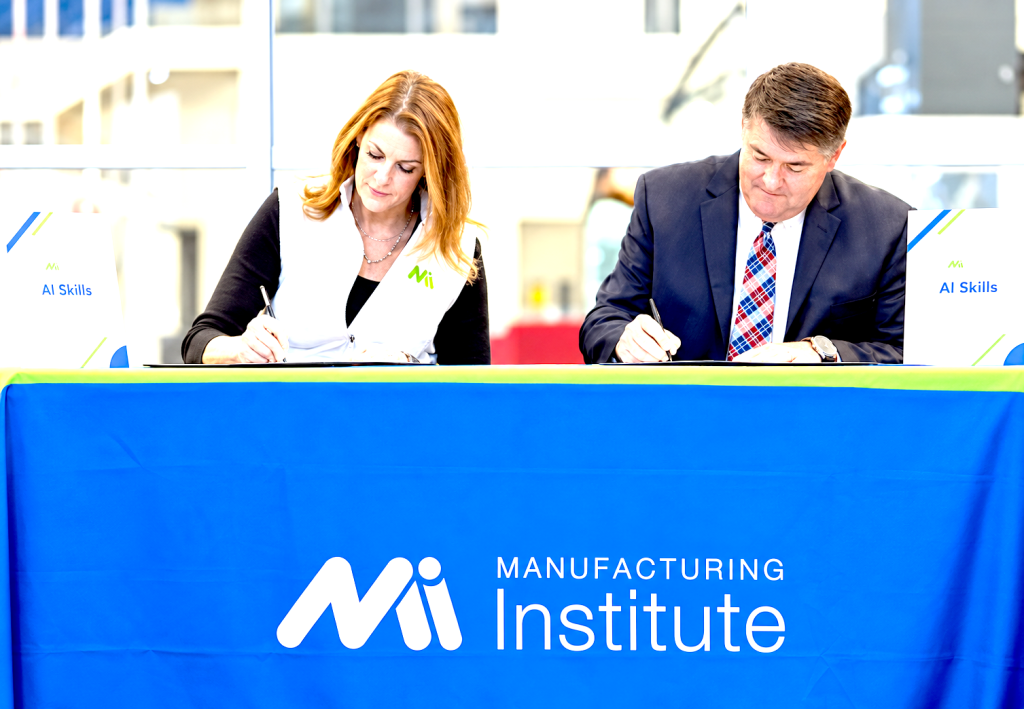
The Manufacturing Institute and the Alabama Community College System signed an agreement Monday at Calhoun Community College to bring the institute’s AI Skills for Manufacturing Training Suite to colleges across the state. The rollout begins immediately and includes no-cost courses focused on practical work on the factory floor.
The Manufacturing Institute is the workforce development and education partner of the National Association of Manufacturers. Its new instruction includes AI Fundamentals for Manufacturing, which is intended to help students and workers understand tools increasingly used in industrial settings.
Keith Phillips, deputy chancellor of Workforce and Economic Development and the Alabama Training Network, said the partnership is meant to keep college instruction aligned with changing employer needs. Manufacturing accounts for nearly 13% of Alabama’s workforce, according to the announcement.
The signing at Calhoun gives the statewide initiative a direct North Alabama connection. Guests also toured the college’s Rocket City FAME facility, where students receive industry-aligned technical training.
The agreement establishes access to training; it does not announce a new factory, guarantee jobs or state how many students will enroll. Its effect will become clearer as colleges introduce the courses and employers report whether graduates have the skills they need. For students considering manufacturing careers, the immediate question is when the instruction will be available at their campus.