


By SPEAKIN’ OUT NEWS
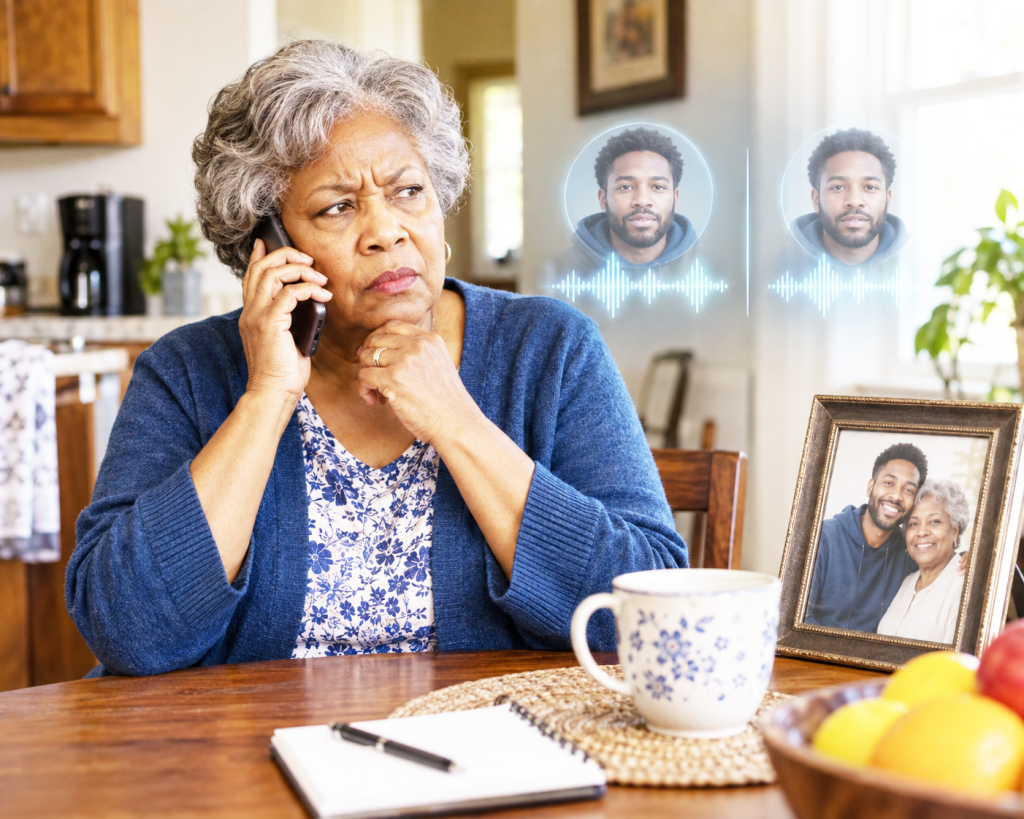
A familiar voice on the telephone is no longer proof that a loved one is calling. Criminals can capture a few seconds of audio from social media, videos or voicemail and use artificial intelligence to clone that person’s voice. The fake caller may claim there has been an arrest, accident or medical emergency and demand money immediately.
The danger is growing in Alabama. The FBI’s Internet Crime Complaint Center reported that 2,057 Alabamians age 60 and older lost nearly $58.8 million to fraud in 2025. That was a sharp increase from approximately $33.2 million reported by 1,567 older Alabama victims in 2024. Reported cases represent only part of the damage because many victims never come forward.
Scammers often create panic, insist on secrecy, and request gift cards, cryptocurrency, wire transfers, or payment apps. Some pose as bank employees, police officers or government investigators and tell victims to move retirement savings into a so-called safe account.
Stop and verify before sending anything. Hang up and call your loved one using a number already saved in your telephone. If you can’t reach the person, contact another relative. Families should create a private code word for genuine emergencies and require a second call before any urgent payment.
Never provide a one-time verification code, Medicare number, Social Security number or banking password to an incoming caller. Caller identification can also be manipulated.
If you sent money, contact the bank or payment company immediately and request a reversal. Report suspected fraud to local law enforcement, the FBI at IC3.gov, and the Federal Trade Commission at ReportFraud.ftc.gov. Quick action may help stop additional losses and protect other families.