


By SPEAKIN’ OUT NEWS
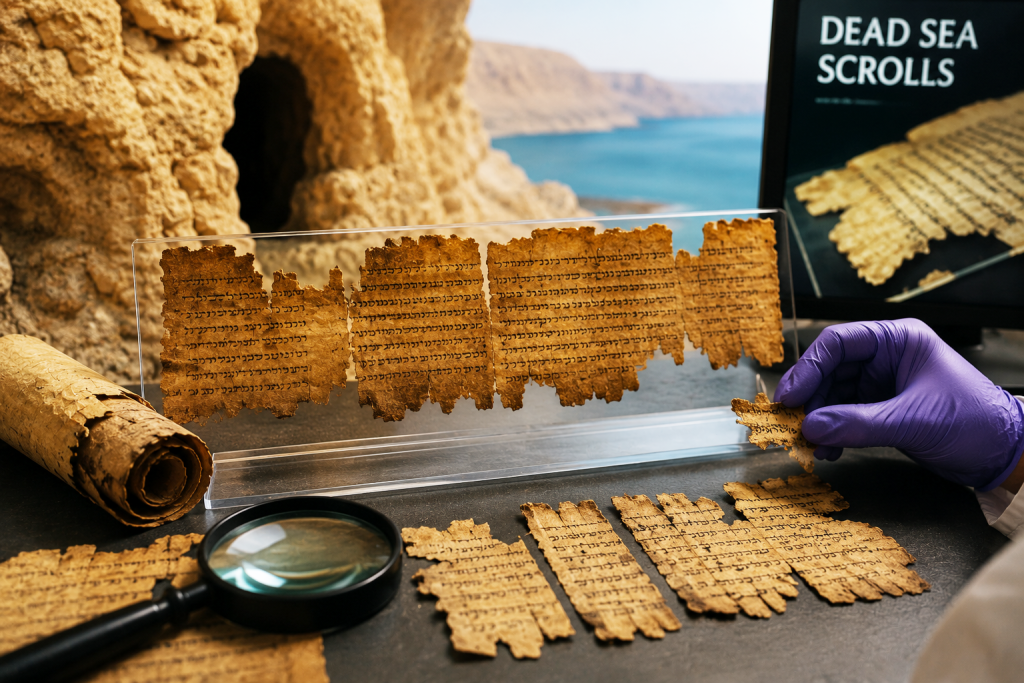
A major international research effort is set to shed new light on one of the most important archaeological discoveries in biblical history. Backed by a $2.8 million grant from the European Research Council, scientists will spend the next five years studying the origins of the Dead Sea Scrolls using artificial intelligence and advanced laboratory technology.
Discovered in caves near the Dead Sea beginning in 1947, the scrolls date from the third century B.C. to the first century A.D. They include some of the oldest known copies of books from the Old Testament and have helped confirm the remarkable accuracy of the biblical text over thousands of years.
The project is being led by Professor Mladen Popović of the University of Groningen in partnership with the Israel Antiquities Authority and an international team of historians and scientists.
Researchers will combine artificial intelligence, chemical analysis, handwriting studies, and manuscript science to determine where the scrolls were written, who copied them, and why they were hidden inside caves. They also hope to learn whether the caves served as libraries or hiding places during times of conflict.
The team plans to digitally analyze and map more than 25,000 manuscript fragments, creating one of the most comprehensive databases ever assembled on the Dead Sea Scrolls.
“This is the largest research project to date to use artificial intelligence to investigate the cultural context of the Dead Sea Scrolls,” Popović said. “These manuscripts provide an extraordinary window into the intellectual world of ancient Judea.”
Researchers believe the findings could transform scholars’ understanding of biblical history, ancient Jewish culture, and the transmission of Scripture.