

by the Associated Press
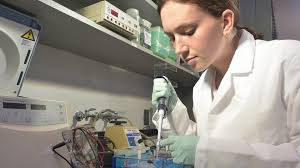
Alabama’s bioscience researchers and organizations have mobilized to combat the COVID-19 pandemic, helping to advance urgent work that could lead to new treatments and vaccines.
This includes Birmingham-based TriAltus Bioscience LLC, which developed protein purification technology to support research into a new COVID-19 vaccine under development at the Earle A. Chiles Research Institute in Portland, Oregon.
Institute researchers are using the TriAltus CL7/ lm7 system to isolate and purify the distinctive Spike protein, or S-protein, that helps the COVID-19 virus attach to and infect human cells.
“We’re in a race to develop this vaccine as quickly as possible, so it’s important to have technology that helps us isolate and purify the S-protein for time-critical research,
said Dr. Hong-Ming Hu, a scientist at the Earle A. Chiles Research Institute at the Providence Cancer Institute.
Hu’s team is fast-tracking the development of the potential vaccine, with trials possibly beginning in May.
“It’s rewarding to know that our product can help expedite the search for a COVID-19 vaccine,” TriAltus CEO Bob Shufflebarger said.
The CL7 technology was invented by a team led by Dr. Dmitry Vassylyev, TriAltus co-founder and professor of biochemistry and molecular biology at the University of Alabama at Birmingham (UAB).
Targeting a treatment
In Huntsville, a collaboration aims to learn how the human immune system responds to the SARSCoV-2 virus, which causes COVID-19, with hopes for developing an effective treatment for the disease.
Teaming in the effort are Huntsville Hospital, the HudsonAlpha Institute for Biotechnology and iRepetroire, a diagnostic technology company on the HudsonAlpha campus. “The most effective way to stop pandemics is with vaccines,” said Dr. Rick Myers, president and scientific director for HudsonAlpha. “However, the pipeline for vaccine production from development, to testing, to market can take years. A COVID-19 treatment is the best way to bridge the gap until a vaccine is widely available.”
Researchers at HudsonAlpha and iRepertoire hope the results of the study can be used to find and test possible treatments or cures for COVID-19 by using antibodies identified in patients diagnosed with COVID-19.