

by SPEAKIN’ OUT NEWS
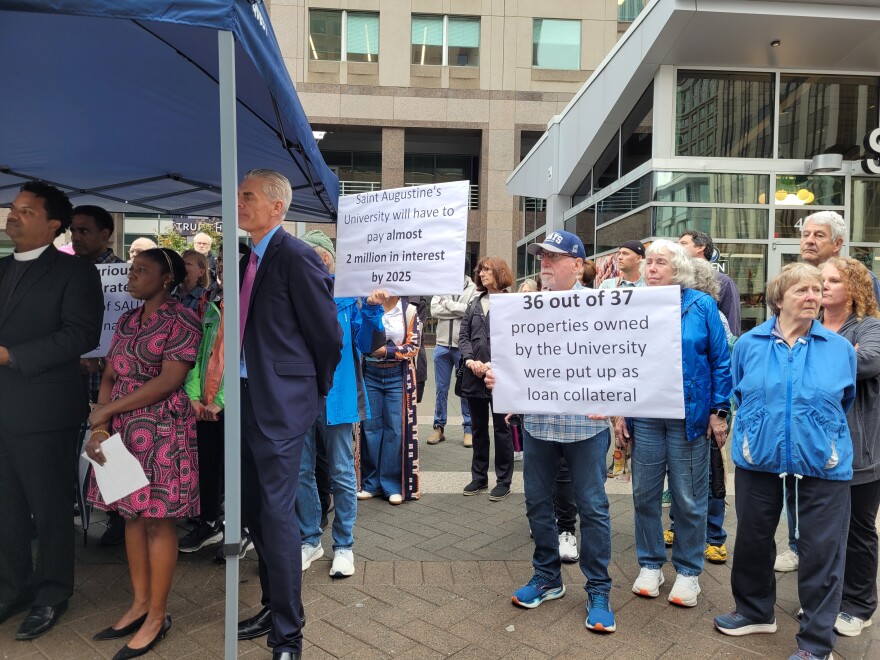
RALEIGH, N.C. — Saint Augustine’s University, a 159-year-old historically Black university in Raleigh, North Carolina, has filed for Chapter 11 bankruptcy protection, calling it a strategic step to restructure the institution’s finances and preserve its long-term future.
The filing, made Monday in the U.S. Bankruptcy Court for the Eastern District of North Carolina, reveals that SAU owes between $50 million and $100 million to approximately 345 creditors — including vendors, financial lenders, former students, and multiple federal agencies. The Internal Revenue Service is the university’s largest single creditor at $14.4 million. The U.S. Department of Commerce is owed $2.1 million, the Department of Education $1.9 million, and the North Carolina Department of Revenue $1.7 million. The university estimates its assets at between $100 million and $500 million, largely tied to its 105-acre campus northeast of downtown Raleigh.
SAU simultaneously announced it will stop pursuing litigation to restore its accreditation status, which is set to expire May 15. The university lost its accreditation from the Southern Association of Colleges and Schools Commission on Colleges in 2025 following years of financial mismanagement, governance failures, and mounting debt. Rather than continue the legal fight, SAU said it will focus on supporting current students through teach-out agreements, developing non-degree certificates and apprenticeship programs, and building a pathway toward reaccreditation.
A leadership change was also announced. Interim President Dr. Jennie Ward-Robinson has stepped down after approximately four months in the role. The Board has appointed Dr. Verjanis A. Peoples as the new interim president. “These steps position the University to move forward with clarity and purpose,” SAU said in a statement.
The collapse of enrollment tells the story most starkly. Two years ago, SAU served more than 1,000 students. Today, that number has fallen to approximately 200. Without accreditation, students cannot receive federal Pell Grants — a critical lifeline at an institution where more than 76 percent of students historically received federal financial aid.
The situation is not without precedent in HBCU history. Morris Brown College in Atlanta lost its accreditation in 2002, filed for bankruptcy, and spent nearly two decades rebuilding — eventually regaining accreditation in 2020 and growing its enrollment from 20 students back to more than 400. Whether Saint Augustine’s can follow a similar path remains to be seen.
“Chapter 11 provides a comprehensive path to address our financial challenges and move forward with a stronger foundation,” the SAU Board of Trustees said. The university says classes and student services remain ongoing during the restructuring process.