


by SPEAKIN’ OUT NEWS
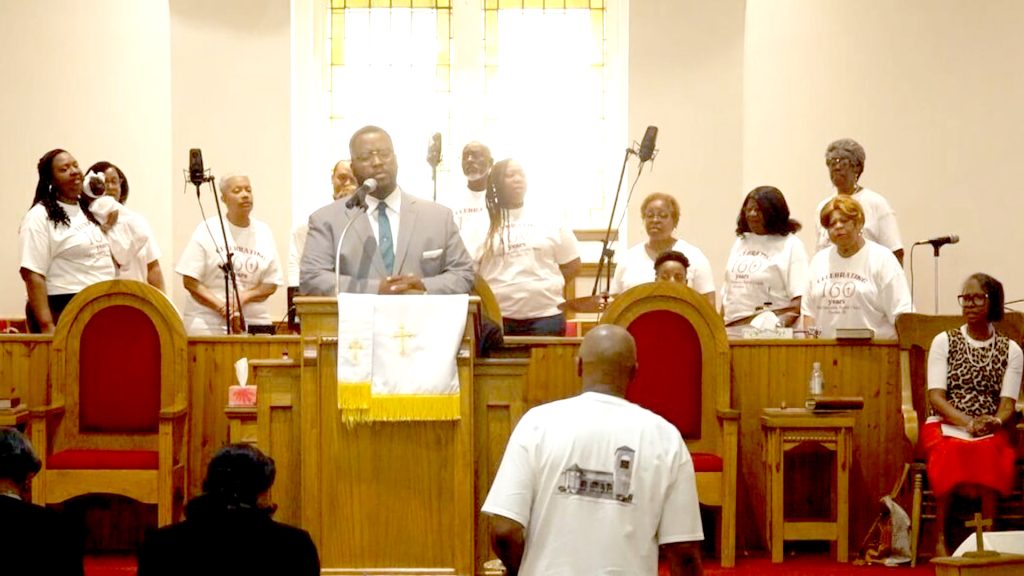
DECATUR — First Missionary Baptist Church celebrated its 160th anniversary on Sunday, April 26, with a packed worship service that honored one of the most remarkable origin stories in Alabama’s Black church history.
The church was founded on April 22, 1866 — just one year after the end of the Civil War — by 21 formerly enslaved individuals who gathered in the home of Sister Jane Young under the leadership of Rev. Alfred Peters, the congregation’s first pastor. From those humble beginnings in a storefront along the banks of the Tennessee River, First Missionary grew into an institution that has shaped the spiritual, civic, and cultural life of Decatur for a century and a half.
Pastor Daylan Woodall told WAFF that the church’s story cannot be separated from Alabama’s history. “I think it’s impossible to tell the story of Alabama well and faithfully without the inclusion of our church’s history because it is the history of the making of a people,” Woodall said. “People who survived the institution of slavery. People who survived the institution of Jim Crow, and who, in spite of all that had been done to destroy them and denigrate them, they built sacred communities, they built institutions, they cultivated a sense of identity.”
First Missionary is the second-oldest African American church of any denomination in Decatur and one of the oldest congregations in the state of Alabama. Its current sanctuary, a Neoclassical Romanesque landmark in Old Town Decatur, was designed in 1921 by W.A. Rayfield — one of the most celebrated African American architects in the South. The building was constructed, according to historical records, through the efforts of professionals, craftsmen, and the donated “nickels and dimes” of a community determined to build something lasting.
One hundred and sixty years later, that community is still building — still gathering, still worshipping, and still standing as proof that what was meant to destroy a people could not stop them from creating something sacred.