

By Madison County Commissioner Violet Edwards, District 6
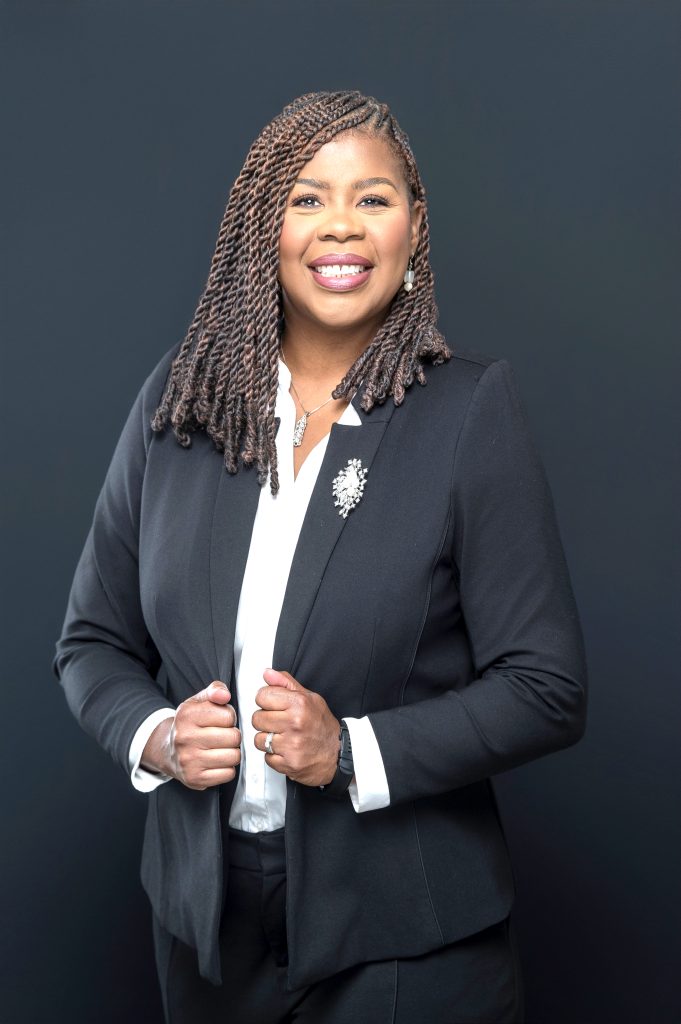
(contributed)
This is an opinion article.
I recently learned that I am being honored with the Beulah Ballard Toney Service Award, named for the civil rights pioneer and the first Black woman to serve on the MadisonCounty Board of Registrars.
When I met Ms. Beulah as a reporter twenty years ago, I didn’t know what the Board of Registrars did. I hadn’t thought about who managed the voter rolls; I just knew it was important for my name to be included. Ms. Beulah soon taught me that there are real people who act as gatekeepers of voting rights. Democracy, I realized, exists in the details.
In Alabama’s Jim Crow era, county registrars’ offices functioned as mechanisms of Black disenfranchisement. The United States Constitution guarantees the right to vote to all citizens. Yet the registrar’s office remains the point where democracy transforms from abstraction into social fact. In practice, this meant that those administering these offices were empowered to deny Black political participation.
We know the history: poll taxes, literacy tests, and procedural obstacles that varied from office to office. County registrar officials deployed these tools, effectively neutralizing Black suffrage, particularly in places where Black voting power could have shifted electoral outcomes.
Think Selma 1965, when roughly 300 Blacks were registered to vote in Dallas County, out of approximately 15,000 eligible Black residents. This led to people losing their voices. Without registration, there was no ballot, and without a ballot, there was no voice. The registrar’s office became the place where someone went from being just a person to being a political participant. But it goes further than that. Registration is a way for the state to say someone matters. In this way, the registrar’s office helps decide whose voices are recognized and valued.
Ms. Toney took the time to learn how democratic administration works and to understand where state policy and local government come together. Her life and lessons showed m how important record-keeping really is. Our lives are often shaped by documents, for better or worse. The people who keep records, manage documents, and carry out government work have a big impact, even if their jobs seem dull.
It is clear that registration practices can empower or disempower an electorate, which is why the SAVE Act of 2026 is so reckless. In an attack on our democracy, all eyes are on the seemingly dull administrative work of record-keeping and registration. The SAVE Act would require individuals to provide, in addition to proof of residency, documentary proof of U.S. citizenship. Which means no more registering to vote on campuses, at churches, and at voter registration drives. Vital records, such as a passport, birth certificate, and marriage license, will be taken to, you guessed it, the board of registrars’ office. It will be up to this office to authenticate the documents. It will be up to this office to decide whether a voter who lacks one of the specified documents has done enough to prove citizenship.
Will criminal penalties be levied if an honest mistake is made? Will election officials face significant legal risk? Will we go back to the days of Jim Crow, of abusive, soul-snatching gatekeeping? The confusion of extra documentation, the daunting task of obtaining missing documents, and the additional burden on election offices will throw the registration process into chaos. Not to mention the potential for thousands of Alabamians to throw up their hands and refuse to jump through the extra hoops.
Makes me wonder what Ms. Beulah would say today. She carried voter registrationapplications with her long after she left office, teaching that voter rolls are a site of human evaluation. And now, more than ever, if we want a democracy where every person matters and every vote counts, we must maintain just systems of record and registration. Because democracy is ALWAYS in the details.