

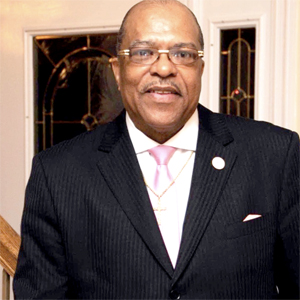

By: REV. DR. ISAIAH ROBINSON, JR.
Scriptural text: ISAIAH 2: 2-4; ACTS 17: 26-28
KEY VERSE: Many people will come and say. “Come, let us go up to the mountain of the LORD, to the temple of the God of Jacob. He will teach us His ways, so that we may walk in His path.” The law will go out from Zion, the word of the Lord from Jerusalem.” (Isaiah 2:3, NIV).
INTRODUCTION: The acknowledgment of commonality in humanity finds the folder for peace. Our lesson focuses on understanding as a means to peace. While we may not understand all the inner workings of other people, cultures, ethnicities, or nations, we can grasp that we are all interconnected. It is only when we recognize that our lives can work together to achieve common goals. It is better to focus on what holds us together than what separates and pulls us apart. The Isaian text points to a time in which people from all over the world will worship together, recognizing God as Lord of all. Acts, on the other hand ,points to the beginning of humanity and acknowledges our common ancestry. All men and women share a common bloodline, a biblical fact corroborated by scientific evidence. Isaiah’s declaration that Israelite supremacy is the hope of and acknowledgement of the blessing that comes when all of God’s people get together. Paul in Acts acknowledges that the Roman Empire was culturally and ethnically diverse, so much so that polytheism was the normal order of the day, and the thought of one God was strange to most people. It is because of this that Paul argues that all people come from the blood. Despite having disparate cultures and ethnicities, all could acknowledge their similar origins and thus sameness in God. Peace comes as we concentrate on what we have in common.
Many are Drawn to the High Holy Place (Isaiah 2:2-3).
Isaiah likely referred to Mount Hermon. Its significance lay and not in height, but in history. There, Abraham placed his son Isaac on the altar, only for God to spare him. This marked the place as holy, not for its geography, but for its testimony of obedience and deliverance. Later, Solomon built the Temple there, a magnificent sanctuary OF WORSHIP. For generations, Jews came to this place to celebrate their faith, until the Babylonian siege destroyed it. Isaiah’s vision pictured many nations streaming to this holy mountain to worship. In this vision, the mountain of the house of the Lord is the sacred place where heaven and earth intersect. Even today, Christians, Muslims, and Jews alike view it as sacred. Christians, however, affirm that the one worthy there is Jesus Christ, the Lord of all. This place represents revelation, refuge, and redemption.