


SPEAKIN’ OUT NEWS
MONTGOMERY, Ala. — After months of escalating U.S. military activity in the Caribbean and off South America’s coast, President Donald Trump took an unprecedented step this past weekend: launching a large-scale military strike on Venezuela and capturing Venezuelan President Nicolás Maduro on drug-trafficking charges.
The operation was carried out without congressional authorization and, according to multiple lawmakers, without Congress being notified until the strike was already underway, raising serious questions about potential violations of the 1973 War Powers Resolution and the U.S. Constitution.
In the aftermath, Trump escalated further—vowing to expropriate Venezuela’s oil industry and declaring that the United States would “run the country” until a transition is complete. That language has ignited sharp backlash and a deep political divide across Alabama.
“We’re going to have our very large United States oil companies, the biggest anywhere in the world, go in, spend billions of dollars, fix the badly broken infrastructure, the oil infrastructure, and start making money for the country,” President Trump said.
Alabama Democrats: “A dangerous and illegal precedent.”
Several Alabama Democrats condemned the strike, arguing that while Maduro is widely viewed as corrupt and illegitimate, Trump crossed a constitutional red line.
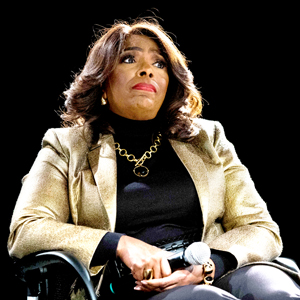
“There is no doubt that Nicolás Maduro is an illegitimate and corrupt leader, but President Trump does NOT have the authority to unilaterally invade a sovereign country, capture its leader, and haul them back to the United States,” said U.S. Rep. Terri Sewell, D-Alabama, in an official statement.
“His reckless actions threaten to further destabilize the region and put our troops in harm’s way while dragging us into another regime-change war against the will of the American people.”
Sewell warned that Trump’s failure to seek congressional approval was “extremely alarming” and “sets a dangerous precedent,” demanding the administration immediately explain its legal justification and long-term plan.
Freshman U.S. Rep. Shomari Figures, D-Alabama, echoed that warning, comparing the move to past U.S. military failures.
“Donald Trump has seemed hell-bent on starting a war since he returned to office,” Figures wrote. “Acting without congressional authorization and stating the U.S. will ‘run’ Venezuela puts American troops at risk and ignores the hard lessons of Iraq, Afghanistan, and Vietnam.”
Figures added that “America should never invade and occupy another country without Congressional approval.”
Challengers and critics break ranks
Opposition extended beyond sitting lawmakers. Andrew Sneed, a Democratic challenger in Alabama’s 5th Congressional District, framed the issue as a breakdown in constitutional checks and balances.
“Congress MUST be Congress,” Sneed said. “As a member of Congress—a co-equal branch of Government—[the representative’s] responsibility is to serve as a check, not a cheerleader, for the Executive.”
Sneed emphasized Trump’s own words, noting that a prolonged U.S. presence made clear the action was “far more than a criminal extradition.”
Even some Republicans voiced concern. Case Dixon, a Republican candidate in Alabama’s 6th District, called the strike an unconstitutional overreach.
“Bringing criminal charges does not suspend the Constitution of the United States,” Dixon said.
“The President does not gain war powers, detention authority, or the authority to govern another country simply by filing paperwork in federal court.”
Protests erupt across Alabama
Public opposition spilled into the streets over the weekend, with protests reported in Huntsville, Birmingham, and Dothan. Demonstrators rejected the idea of war as a pathway to control Venezuela’s oil reserves.
Members of Indivisible, 50501, and Democratic Socialists of America (DSA) walked across downtown Huntsville against the Trump administration Saturday afternoon, after the move overnight to attack the Venezuelan capital and take over.
“Korea, Vietnam, Iraq, Afghanistan. We’ve done this song and dance before,” said Gregory Angle, speaking to WAFF 48 News. “Come in, put in a military leadership, stay there for 20 years, spend all of our tax dollars, our young men’s lives.”
“The whole reason that this is happening is so that the billionaires can control oil in Venezuela because they had nationalized that from Exxon,” Angle said. “We have no business running Venezuela, and the oil executives that they’re putting in charge there are especially ill-equipped to be running a country.”
Alabama Republicans back Trump
While Democrats and protesters questioned the legality of the strike, most of Alabama’s Republican congressional delegation praised Trump’s actions and the U.S. military, framing the operation as a necessary national-security measure.
U.S. Rep. Dale Strong, R-Alabama, whose district includes Huntsville and Redstone Arsenal, aligned with the Trump administration’s position and expressed support for the operation, focusing on national security and the capture of Maduro. Strong did not publicly address questions regarding congressional authorization or the War Powers Resolution.
“Nicolás Maduro has faced narco-terrorism charges in the United States for half a decade now, and it’s time he faces those charges head-on in a U.S. courtroom,” said U.S. Rep. Robert Aderholt, R-Alabama. “I applaud President Trump for carrying out his duties.”
U.S. Sen. Katie Britt praised the operation and the military.
“The step taken today by @POTUS to take the brutal narco-terrorist Nicolás Maduro into custody was bold, courageous, and will save countless lives,” Britt wrote. “I’m thankful to the members of our military and law enforcement officials who successfully executed this mission and look forward to Maduro having his long-overdue day in court.”
U.S. Sen. Tommy Tuberville echoed that support.
“Thank you to the brave service members who have apprehended this criminal and sacrifice every day to keep America safe,” Tuberville posted.
“This is what America First national security looks like. Let this be a warning to anyone who threatens our country.”
House Armed Services Committee Chairman Mike Rogers, R-Alabama, focused on Maduro’s alleged crimes rather than the legality of the strike.
“[Maduro’s] illegitimate regime brutalized the Venezuelan people, aligned with hostile adversaries like Cuba, Iran, Russia, and China to threaten U.S. security, and operated a narco-terrorist network that flooded our country with deadly drugs that killed countless Americans,” Rogers wrote.
“I am grateful to the brave men and women of our Armed Forces who once again demonstrated the exceptional skill and capability of the U.S. military.”
Global allies warn Trump’s actions threaten NATO
International concern over Trump’s Venezuela operation intensified this week after Danish Prime Minister Mette Frederiksen warned that a U.S. takeover of Greenland would effectively mark the end of NATO.
“An American takeover of Greenland would amount to the end of NATO,” Frederiksen said, responding to Trump’s renewed rhetoric about acquiring the Arctic territory.
Greenland is a semiautonomous territory of the Danish kingdom and falls under NATO’s collective defense umbrella. Frederiksen’s warning followed the U.S. military strike in Venezuela—an operation launched without congressional authorization—fueling fears among U.S. allies that Trump’s foreign policy is shifting from intervention to territorial control.
Greenland holds resources that are central to modern life and U.S. national security. The Arctic territory contains significant rare earth minerals used to make smartphones, laptops, electric vehicle batteries, wind turbines, solar panels, and advanced military technology such as missile guidance systems and radar. Greenland also has uranium deposits used for nuclear energy and defense, along with potentially vast oil and natural gas reserves, becoming more accessible as Arctic ice melts. Beyond resources, Greenland’s strategic location supports U.S. missile defense and space surveillance and offers access to emerging Arctic shipping routes that could reshape global trade.
Critics note that Trump’s interest in Greenland, combined with his declaration that the U.S. will “run” Venezuela and seize its oil industry, signals a broader disregard for international law and alliance norms that have defined the post–World War II order.
What comes next
As Congress returns from recess, some Democrats are openly discussing impeachment, while national leaders demand answers from the White House regarding the scope, legality, and duration of U.S. involvement in Venezuela.
Whether Trump’s unilateral action reshapes U.S. foreign policy—or becomes a defining issue in the 2026 midterm elections—remains to be seen.
But in Alabama, the divide is unmistakable: while Nicolás Maduro is broadly condemned, Trump’s seizure of Venezuela has reignited a fierce debate over war powers, constitutional limits, and whether the United States is drifting toward another open-ended conflict—this time driven by oil.