


By ALYSSA GUZMAN
- Civil rights activist Lucille Times, who got in a fistfight with a bus driver in Montgomery, dies at 100
- She boycotted the buses before the Montgomery Bus Boycott had begun by picking up Black passengers
- She was among the 25,000 people who took part in the Selma to Montgomery March with MLK
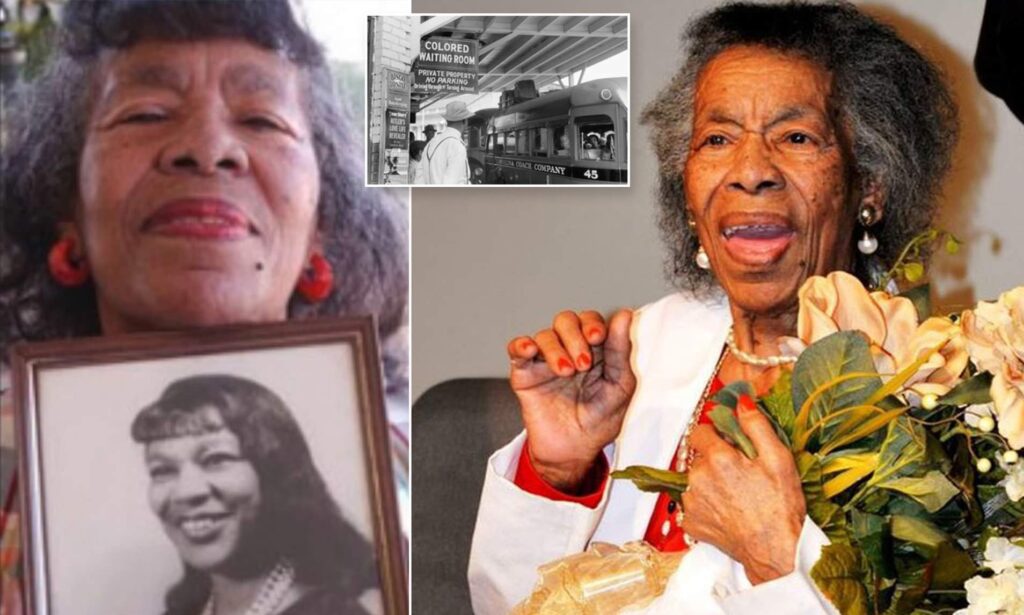
A civil rights legend, who took part in the march from Selma to Montgomery in 1965 and who confronted the same bus driver who was driving the day Rosa Parks refused to give up her seat, died at age 100 on Monday.
Before Rosa Parks refused to give up her seat on a Montgomery bus, there was Lucille Times. She got into a fistfight with the driver only six months before in 1955. She claimed the driver tried to run her off the road and she risked being arrested to confront him.
After the ordeal, Times boycotted the buses. The bus boycott gained local and national attention, and she regularly picked up black passengers at bus stops in her car.
During the boycott, 40,000 African Americans chose to walk to work to protest against segregated seating.
The boycott ended with the US Supreme Court upholding a Montgomery federal court ruling to integrate the bus system after the city appealed the decision.
Later in 1965, Times and her husband, Charlie, took part in the march from Selma to Montgomery with Martin Luther King Jr. The 50-mile march took place from March 21-25 after two failed attempts that were met with violence.
Among Times and her husband, as many as 25,000 people marched for the rights of Black voters to register in the South and in support of the Voting Rights Act.
The march was credited with helping pass the act in 1965. The Times opened their home to 18 participants of different races from across the country to stay.
Although she remained relatively unknown to the masses, she and her husband were active in the Montgomery community, owning the Times Café, where they regularly welcomed MLK and his colleagues. The civil rights leader planned the Montgomery Bus Boycott at their café.
Times, born in 1921, was also a member of the NAACP, as well as other organizations.
In 2011, Times was honored with a historic marker in front of her home, where she and her family had lived since 1939. The house itself has been on Alabama’s Register of Landmarks and Heritage since 2007.
In 2017, she won the Unsung Hero Award for efforts in her hometown, but it wasn’t until a year later that others outside Montgomery began to realize who she was.
After she received the award, longtime friend and former Alabama Attorney General Troy King posted a touching video about her on social media that was seen more than a million times within a matter of days.
In the video, Times – who had trouble speaking due to a recent stroke paralyzing her vocal cords – said: ‘It’s how you treat people. Just be nice, be you. I love you for being who you are.’
had trouble speaking due to a recent stroke paralyzing her vocal cords – said: ‘It’s how you treat people. Just be nice, be you. I love you for being who you are.’
The former attorney general praised the activist. ‘You’d never have any idea that a giant of the Civil Rights Movement lived in that house. If you just met her in the grocery store, you’d never know she is who she is and that she had just a direct hand in changing the course of history forever,’ he said.
In February, for Black History Month, Times was the focus of a commemoration in Montgomery. The event was held at a garden named after her, the Nixon Times Community Garden. Despite not being as well-known as Rosa Parks or MLK, Times’ efforts during the civil rights movement changed the course of history forever.